
More Stones than Soil: La Junquera in the Dry Hills of Murcia
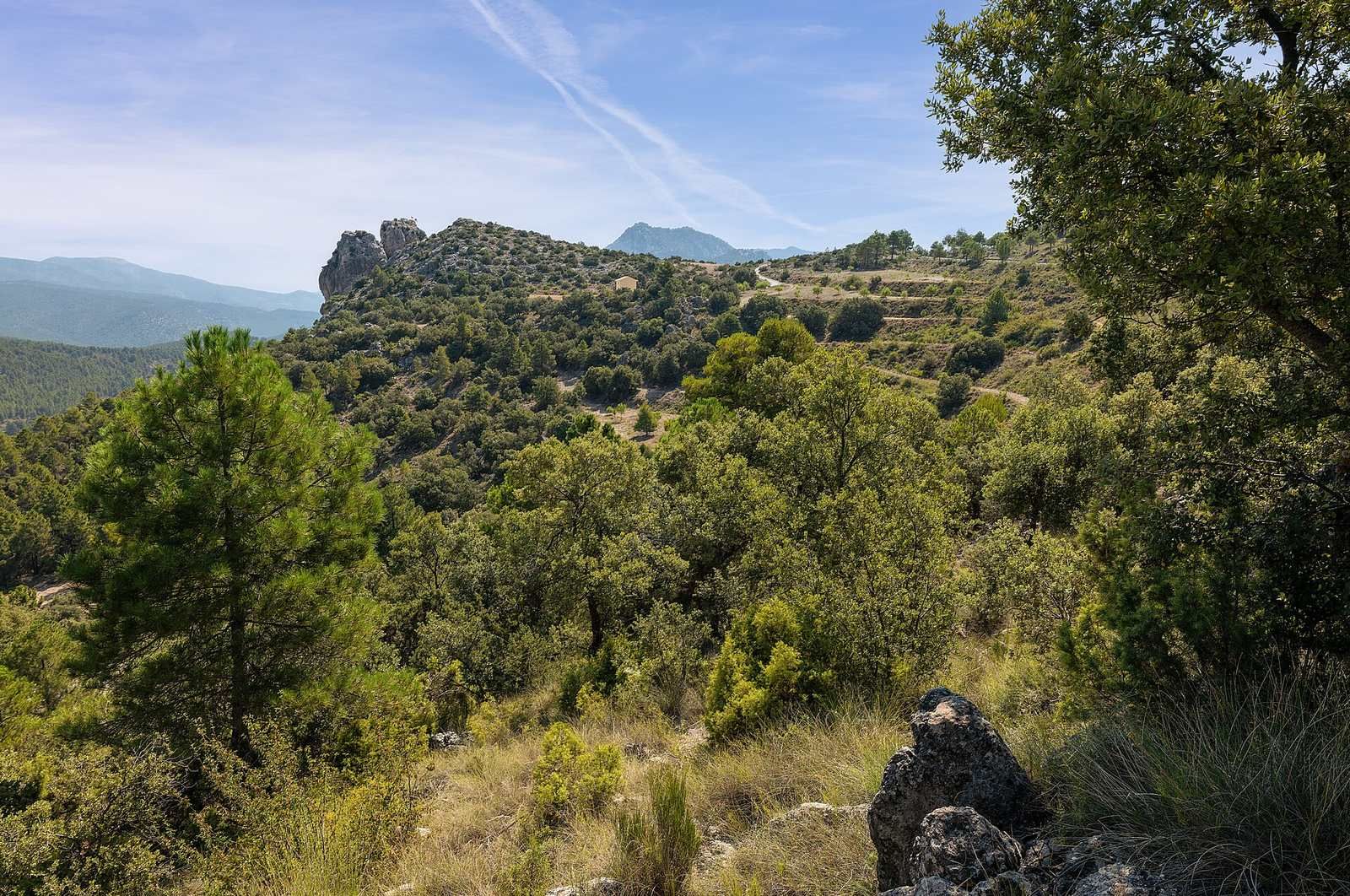
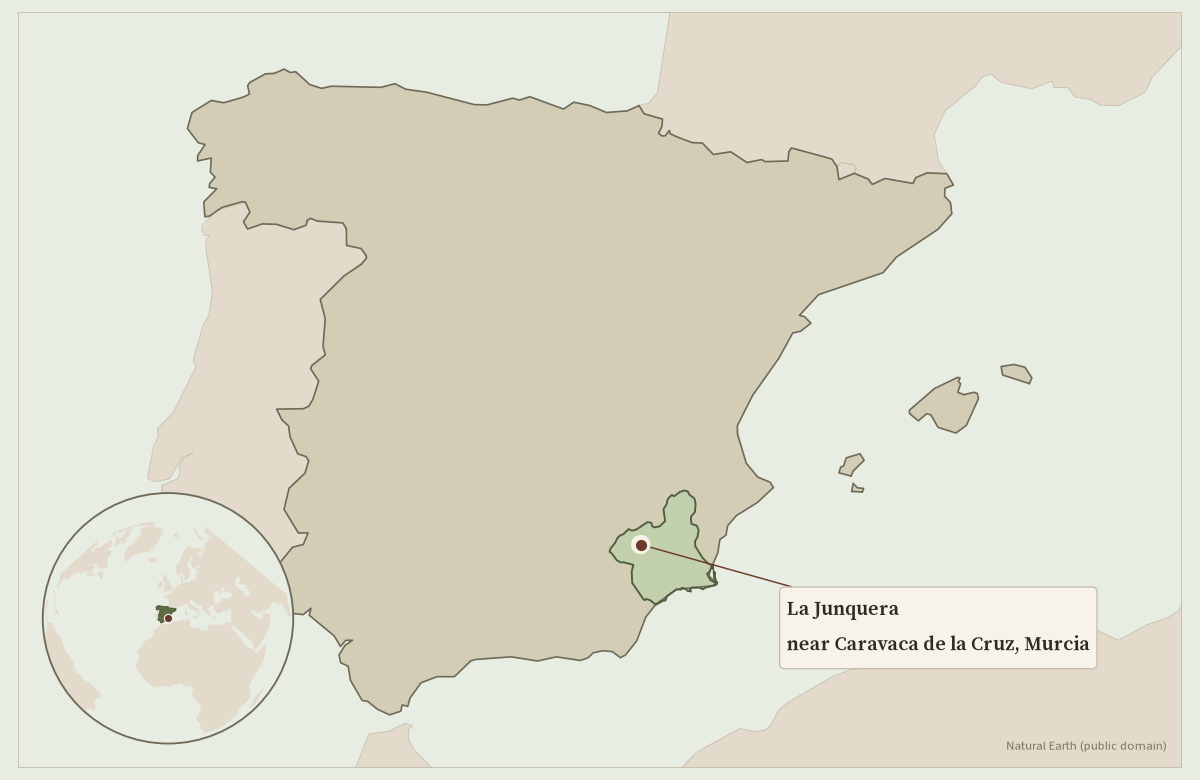
The high country of north-west Murcia is dry, open and easily worn away. Near Caravaca de la Cruz, at the foot of the Sierra de la Zarza, where the Region of Murcia meets the uplands of Granada and Almería, the rain is scarce and the soil can leave with it. The farm sits at the source of the river Quípar. That is the land Alfonso Chico de Guzmán came home to.
La Junquera is a 1,100-hectare family farm. His great-great-grandfather bought it at auction in 1829 from land that had belonged to the Carmelite friars of Caravaca. For years it produced esparto and hemp for the ropes and sails of Cartagena. Then came a long age of cereal, and the village on the farm emptied, from 120 people to none. The last of them left in 1969. Alfonso moved back in 2012. Talking with his father one day, he later told La Verdad, they realised “that soon there would be more stones than soil. So we decided to turn this around.”
I came to the story for that sentence, and for the work that followed: almonds on dry land, animals moved with more care, and a serious attempt to hold the rain.
The challenge
This is one of the driest farming districts on the Iberian Peninsula, with about 300 millimetres of rain a year. For years the ground was left bare and the underground water pumped hard, and the soil was washing and blowing away, around twenty tonnes a hectare each year across these drylands. The worst plot at La Junquera was losing twice that.
Alfonso grew up visiting the farm, then studied business in the United States, and came home as a young man to take it on. In 2010 the place was certified organic. That, he has said, was not enough. “We were not solving the problems of fertility and erosion.” By 2015 he had begun to farm in a regenerative way, aiming to keep the soil, catch the water and bring more life back onto the land.
What they changed
They moved away from a narrow run of cereals. The farm now grows older, deeper-rooted grains, such as chamorro wheat and giant rye, rotated with legumes, and has planted almonds on dry land, with a cover of plants beneath the trees. Lavender, rosemary, thyme and sage grow between the rows and along the hedges, with a small plot of pistachios and other crops in quieter corners. Plants are left to cover the ground through the winter. The almonds are sold through La Almendrehesa, a business set up in the region to market this sort of harvest.
Water is the thread that holds the rest together. The farm has more than ten kilometres of swales, which are ditches dug along the slope’s contour to slow the run-off and let the rain sink in. There are also more than sixty ponds and silt traps. “Even if these ponds don’t hold water year-round, they create a unique ecosystem,” Yanniek Schoonhoven, who farms here with Alfonso and came to the district from the Netherlands, has said. “Within days, frogs, dragonflies, and birds come to drink.”
Grazing belongs in the same picture. The farm has long kept a flock of Segureña sheep, a local breed. Alfonso told BBVA that they now also keep the rare Murciano-Levantina cattle, once the region’s working oxen, and have changed the way the animals are moved so the ground is not grazed bare. It is the same idea Allan Savory taught, and the one that brought grass back to Las Damas in the Chihuahuan Desert.
Alfonso talks about it as a long experiment. “Little by little, we’re experimenting with new ways of adding complexity to the system,” he told the Sustainable Food Trust. “Most experiments fail.” Some really work. After swales were dug on that worst plot and planted with aromatic herbs, the erosion almost completely stopped.
A farm in a wider landscape
La Junquera does not stand alone. It is part of AlVelAl, a local association of farmers, shepherds and others who work with Commonland, a Dutch foundation, to restore a high, dry landscape at real risk of turning to desert, much as the Ovis 21 network does on the Patagonian steppe. Alfonso was elected president of the association in 2019. The farm also hosts the Regeneration Academy, which Yanniek has helped to lead, so students can study the trials on the ground. By 2020 almost twenty people were making a living from the place, where once there had been two sharecroppers and a shepherd.
The farm plants around 10,000 native trees and shrubs a year in its wilder areas. And the birds are coming back. The lesser kestrel, a small falcon in trouble in Murcia, is now one of the farm’s most familiar sights. When Alfonso arrived there were eight pairs. After the family put up nesting tiles and changed the way they farmed, the last count he gave was thirty-two. Like the birdsong on Charles Massy’s farm in Australia, it is one of the plainest signs that the land is healing.
Murcia’s high plains are far drier than a British field, and life there is built around rare rain. Even so, a bare slope here in a wet winter will lose soil just as surely as a bare bank after a cloudburst at home. A cover of plants, and a ditch that gives water time to sink, are not ideas that belong only to the desert edge.
Frequently asked questions
Where is La Junquera?
It is in the north-west of the Region of Murcia, near Caravaca de la Cruz, on the high ground often called the Altiplano Estepario. It covers 1,100 hectares.
What are AlVelAl and Commonland?
AlVelAl is a local association of farmers and others working to restore soil, water and livelihoods across parts of Murcia, Granada and Almería. Commonland is a Dutch foundation that supports that work, and La Junquera is one of the farms in the network.
Can you buy food from the farm?
Yes. The farm’s almonds are sold through La Almendrehesa, and the farm also has its own sales contact. By 2020 the almonds were reaching buyers in several European countries.
Sources
- La Junquera, farm website
- La Junquera, “The Farm”
- Miguel Ángel Ruiz, “La Junquera: una nueva agricultura que cura la tierra,” La Verdad, 21 December 2020
- BBVA, “La Junquera: historia de un joven agricultor que lucha por devolver la vida a su tierra”
- Hester van Hensbergen, “Oases in the desert,” Sustainable Food Trust, 31 March 2022
- Claire Patterson, “How 3 farmers in Spain and Ireland are reversing desertification…,” Commonland
- AlVelAl, “Alfonso Chico de Guzmán, nuevo presidente de la Asociación AlVelAl,” 24 April 2019
- La Almendrehesa