
A New Path for Patagonian Wool: Ovis 21 and Estancia Monte Dinero
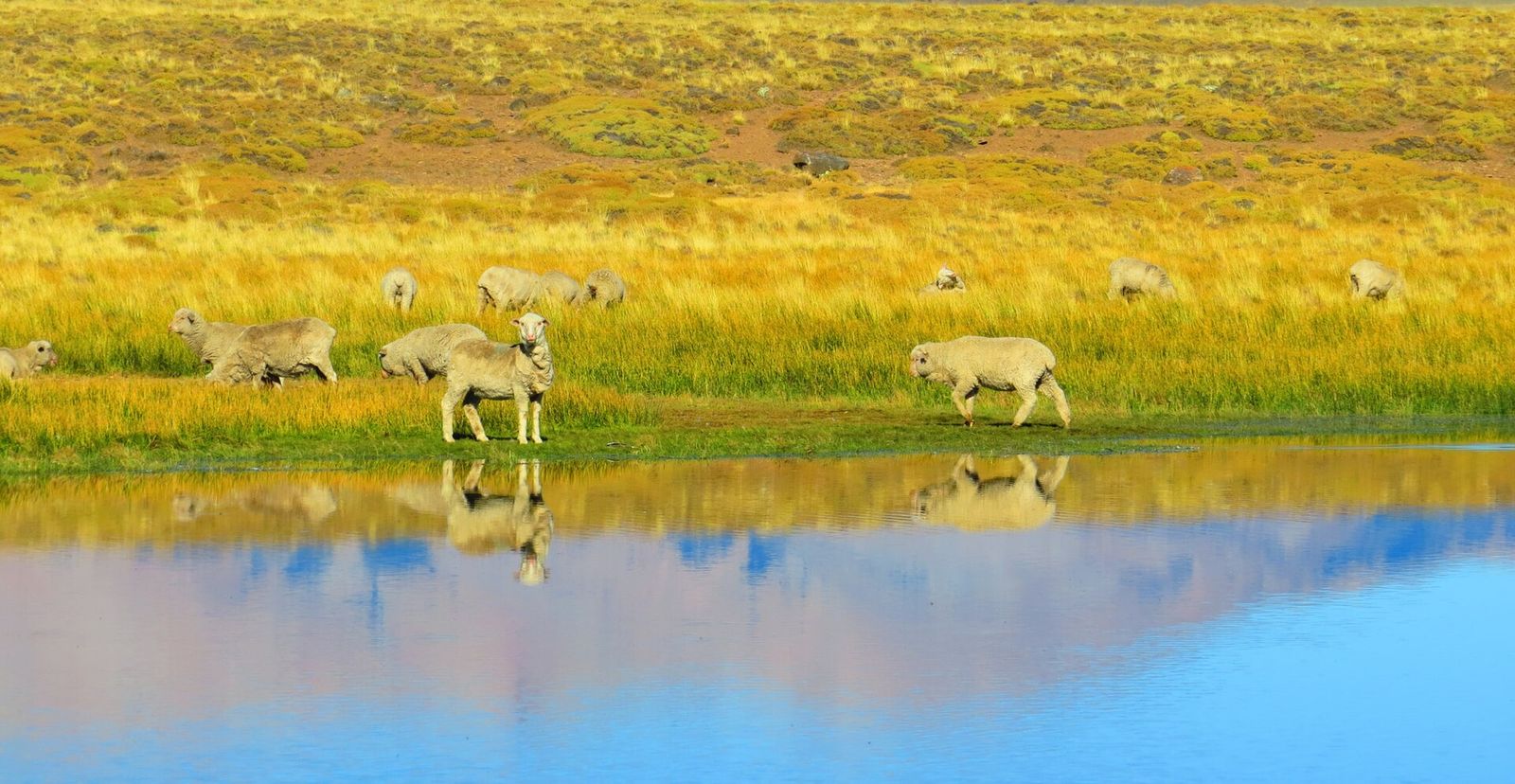
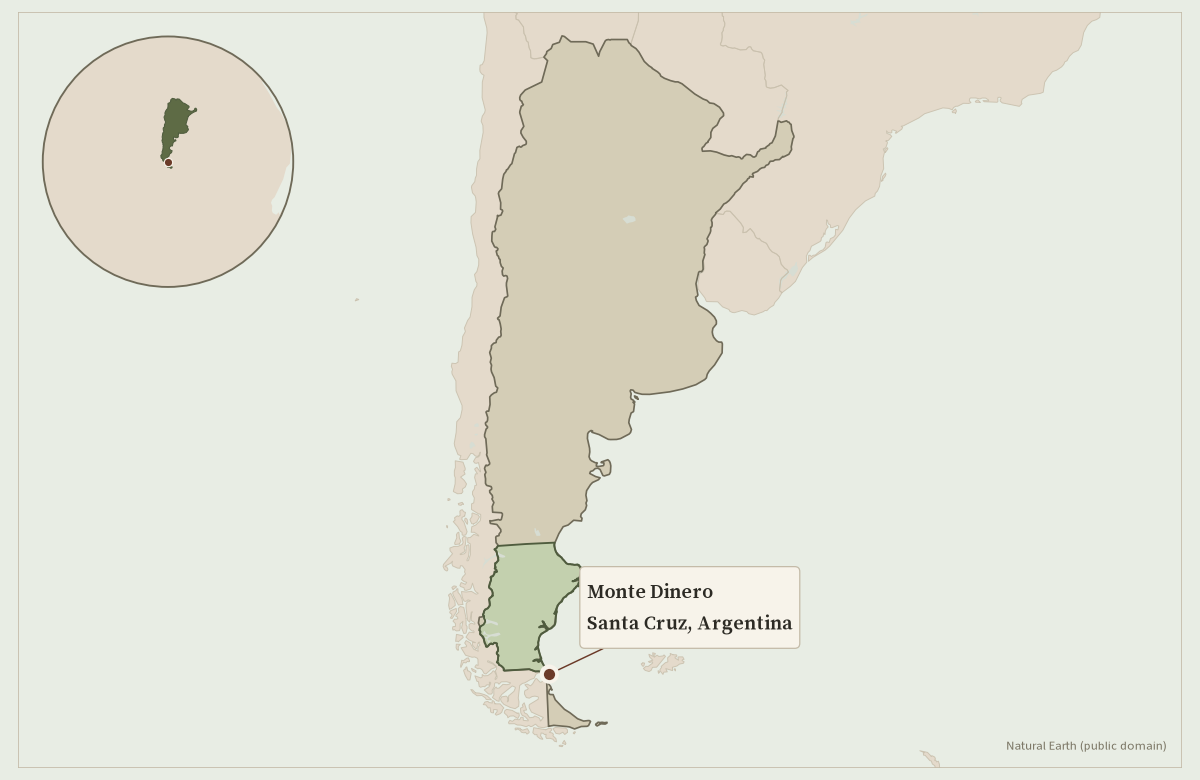
Where the Strait of Magellan meets the Atlantic, at the far southern tip of Argentina, a family still farms sheep on wild native grass. Estancia Monte Dinero belongs to the Fenton family. It lies in Santa Cruz, about 115 kilometres from the town of Río Gallegos, and its Merino sheep are bred to give good meat as well as fine wool. They live entirely on the natural grassland, moved around it to a plan.
I came to Ovis 21 through this farm. It grew from one family farm into a network of Patagonian sheep farmers who learn from each other, because the founders knew one ranch could not turn a whole region around alone.
The challenge
Patagonia is cold, dry, windswept country, and much of its grassland was tired. Pablo Borrelli, a grassland scientist and one of the founders of Ovis 21, later told the Australian farming paper The Land that some paddocks had bare ground, while in others the tasty grasses were giving way to woody shrubs. “None of the ecosystem cycles were working,” he said. Many farmers had given up on sheep or cut their flocks right back.
In June 2003, in Río Gallegos, the Fenton family, Borrelli and Alejandra Canosa set up Ovis 21. Ricardo Fenton had come home from studying in Australia full of new ideas, and the group brought in Australian Merino bloodlines bred for both meat and wool.
The new sheep did well. The grass did not. “The change in productivity and farmer profitability was huge,” Borrelli told The Land. “However, in 2008 we had to realise the results from our grassland management were not going in the right direction. We had great success on the genetics side, but we were not getting any success on the rangeland management side.”
I admire that honesty. Plenty of people would have settled for better sheep and bigger profits. They looked hard at the land, saw it was not healing, and started again.
What changed
The first try at holistic management was at Monte Dinero itself, in 2008 and 2009, according to Ovis 21, with help from an Australian teacher, Brian Marshall. The idea is simple: keep the sheep together in a big flock, move them on often, and give each patch of grass time to grow back.
They pushed it a long way. By 2011 some flocks numbered 25,000 sheep. The land responded well, Borrelli said, but when very large flocks had to walk over huge distances, the sheep themselves started to lose condition. So they scaled back. I like that they put the animals first even while the grass was thriving.
In 2011 they also created a way to check whether the land was really improving, a standard called GRASS, written with The Nature Conservancy. That year they sent their first “sustainable wool” to the outdoor clothing company Patagonia. In 2013 Ovis 21 became the Argentine hub of the Savory network.
Their land-checking work then travelled. From 2015 they helped Savory build a wider scheme for measuring the health of grazed land, which went on to sit behind the Land to Market label. Savory put Ovis 21 in charge of running it worldwide in 2019, and in July 2021 announced that Ovis had handed that job back while staying on as a hub. That is the history as the two organisations tell it.
What they report
At Monte Dinero the sheep are still at the heart of things. They graze native grass only, with nothing sown. La Nación reported in January 2023 that the flock stood at 11,000. The same animals give the farm’s free-range lamb and its fleece.
The network grew a long way from that one farm. Borrelli told The Land that at its peak Ovis 21 brought together 62 farms and 325,000 sheep. Savory’s profile of the hub describes a wool supply chain with more than 1.3 million hectares under certification. For me the teaching is as impressive as the wool. A family ranch at the bottom of the continent helped shape a way of checking land health now used far beyond Argentina.
On the grass itself, Borrelli said that by 2011, on 25 farms, some were able to carry up to a quarter more sheep each year as the grasses came back. Those are his figures, as reported by The Land.
What a farmer here can borrow
Patagonia is a world away from a British farm. The estancias are vast and the climate cold and dry, where ours is wet and green. Even so, the lessons travel. Let the pasture rest and recover. Find a simple way to tell whether the land is getting better. And if a favourite idea is not helping the grass, be willing to say so and change course.
Frequently asked questions
Where is Monte Dinero, and how big is the flock?
It is the Fenton family’s sheep farm in Santa Cruz, Argentina, at the opening of the Strait of Magellan. La Nación put the flock at 11,000 in January 2023.
What is Ovis 21’s link to Savory and Land to Market?
Ovis 21 became Savory’s Argentine hub in 2013. Its GRASS standard, both groups say, helped shape the land-health checks later used for Land to Market. Ovis ran that scheme worldwide for Savory from 2019 until July 2021, and remains a hub.
How large did the network become?
Borrelli told The Land that at its peak Ovis 21 included 62 farms and 325,000 sheep, on 1.3 million hectares.
Sources
- Estancia Monte Dinero, the estancia
- Estancia Monte Dinero, homepage
- Ovis 21, “Sobre Ovis 21”
- Andrew Norris, “Patagonia’s Ovis 21 builds a winding ‘path to profit’,” The Land, 26 April 2021
- Savory Institute, Ovis 21 hub profile
- Savory Institute, “New EOV Team Takes the Reins,” 1 July 2021
- Nicolás Cassese, “Monte Dinero…,” La Nación, 3 January 2023