
When the Birds Returned to the Monaro: Charles Massy and Severn Park
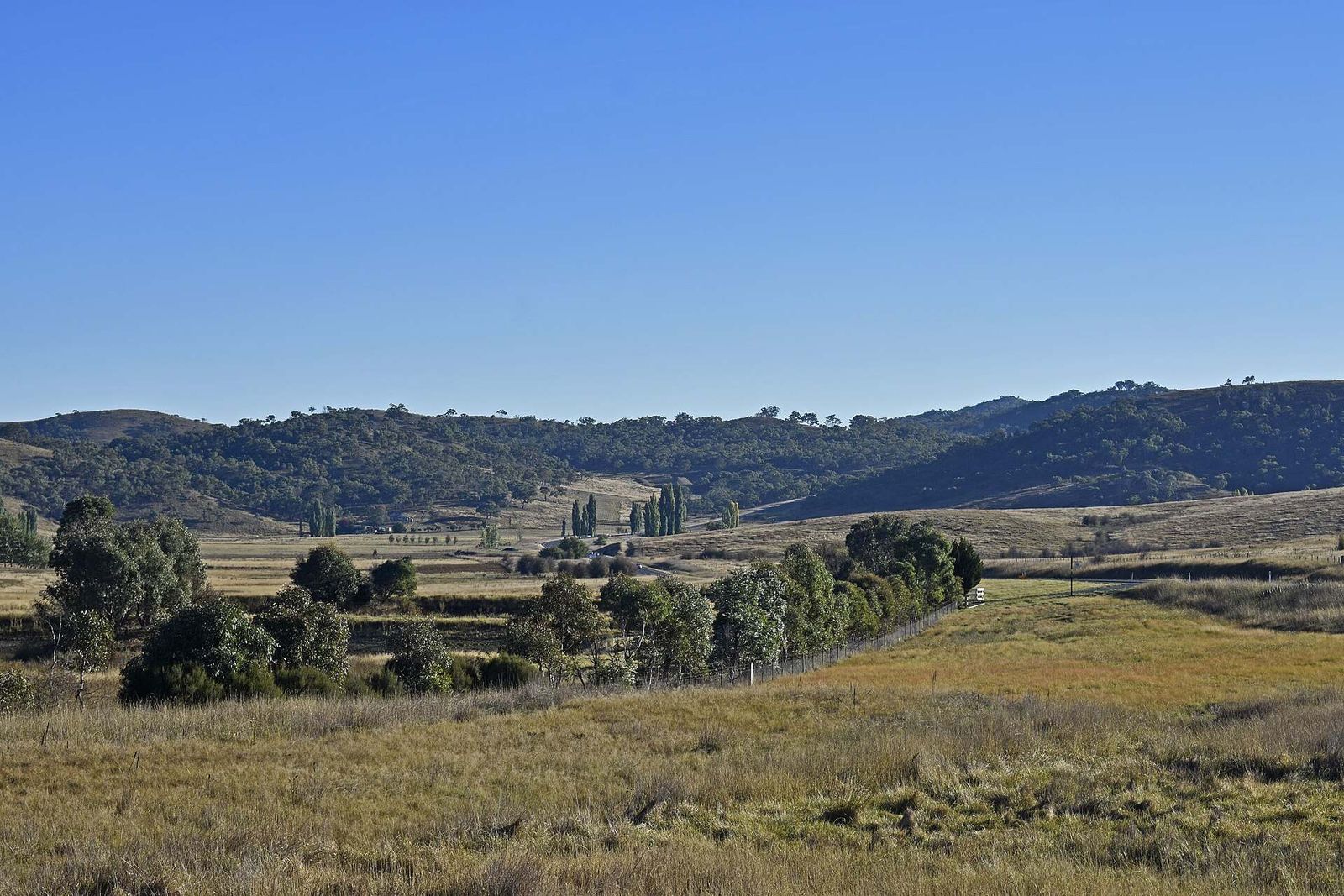
On a still autumn morning in 2016, Charles Massy walked up a hill above Severn Park, his family’s farm on the Monaro near Cooma, and sat down beside an old snow gum. Below him were the homestead and the native brown grasses, dusted with frost. There were swamp wallabies, frogs, and woodland birds he had not recorded on the place before. “As a kid there we had no swamp wallabies or wallaroos,” he later told the ABC.
That picture is why I wanted to tell this story. I have heard him speak several times, and it is the birds that stay with me. The land is high, open and often dry: Ngarigo country, in the New South Wales highlands that run off the flank of Mount Kosciuszko. The Massy family has been at Severn Park since 1928, running merino sheep, and later cattle as well. As the grass recovered, the birdsong came back to those paddocks.
The challenge
Massy was an only child. His mother died when he was four, and he grew up close to the bush, the dogs, and the birds. As a young man he even caught white-winged choughs, put coloured rings on them, and watched how the sisters and aunts raised a brood together. He once hoped to study the behaviour of wild animals. Then, while he was at university reading biology, his father had a heart attack, and at 22 he came home to manage the farm.
He did what a careful young farmer in that district was meant to do. He took the best advice of the day, and built a merino stud whose wool, he has said, was bought by the top houses in Italy. Looking back, he told the ABC, he was also overgrazing the country. “I caused immense damage to this country, perhaps at least a few thousand years’ worth.”
The droughts of the 1980s and 1990s brought the lesson home. In 1982, he said, the whole farm was like a dust bowl, with plagues of wingless grasshoppers. He kept the sheep, bought in grain, and sank into debt. He has spoken openly about what it cost him in spirit as well as on the land. He came close to selling the place. Instead he sold part of it, and began to change the way he farmed.
What changed
By 2000, he has said, he had stopped using chemicals and was farming in a regenerative way. Sheep and cattle are bunched and moved, then the grass is given a rest, the kind of planned grazing that Allan Savory set out and Ian Mitchell-Innes teaches. In dry years he now sells animals early, so the ground keeps its cover, instead of feeding the whole flock until the paddocks blow. In 2019 he told the ABC that the farm is divided into some 80 to 90 paddocks, with grazing charts that give a few months’ warning when the country is starting to slide.
He and the family have planted a great many trees, some 60,000 by 2020. The grass, even when brown in drought, still covers the soil. Insects and birds do some of the pest control that chemicals once did. “We don’t get any wingless grasshoppers anymore,” he said. “Every plant has a spider on it which is eating the grasshoppers or the eggs.”
Around 2010, he later told Wonderground, they sold the big machinery and the drought-feeding gear as well, a clean break so there would be no going back. His daughter Tanya, a farmer and researcher, returned to work on the place in 2019.
The birds, and a book
The title of his book comes from a visit to a friend who had brought a creek back to life. “The day I was there we heard a reed warbler calling in his small patch of reeds,” he told the ABC. “It had just started to grow and it was probably the first time in 150 years that a reed warbler had come back to that denuded valley.” That call became the image for Call of the Reed Warbler: A New Agriculture, A New Earth, published by the University of Queensland Press in 2017. A revised edition followed in September 2020.
At home, the birds have come back in astonishing numbers. Working with botanists and biologists, the family has counted up to 145 bird species at Severn Park, including endangered woodland birds that now live there all year round. I can only imagine what that means to a man who spent his boyhood ringing choughs and watching them raise their young. As a boy he knew a farm without swamp wallabies or wallaroos. As an older man he sat on a hill and heard a richer country.
Later he went back to university and completed a doctorate in human ecology at the Australian National University in 2012, talking to some 80 regenerative farmers along the way. The book grew out of that work, and out of his own mistakes. He has since spent a good deal of time on the road, telling the story so other farmers might try a different path before the land, and the accounts, run out.
The sheep have thrived too. In an interview with Australian Wool Innovation, he said the ewes were still rearing 115 to 120 lambs for every 100 put to the ram, and that a line of their wool had topped the Sydney sales for strength in a drought year. Because the flock was moved every few days, they had also cut right back on worm drenches.
What a farmer here can borrow
The Monaro is not a small UK farm. It is high, cold and often dry, and the paddocks are larger than most British fields. That need not put anyone off. You can still keep the ground covered, move the stock before the grass is eaten bare, and destock in time when a dry spell is coming. You can plant trees and hedges, and you can watch the birds. If they return, or grow in number, that is one of the plainest signs that the land is coming back.
Frequently asked questions
Where is Severn Park?
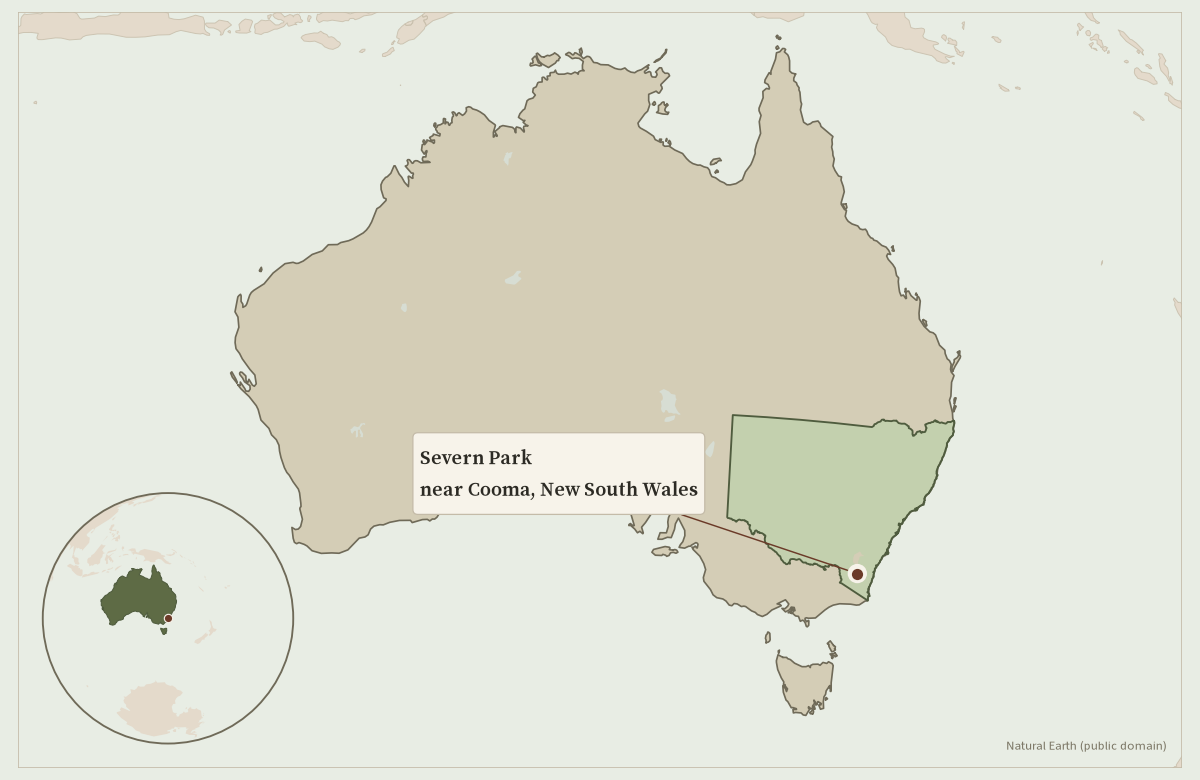
It is on the Monaro in southern New South Wales, near Cooma and Berridale, at Bobundara, on a high plateau in sheep and cattle country. The Massy family has farmed there since 1928.
Does the farm still run merino sheep?
Yes. Massy is a Monaro woolgrower, and the family also runs cattle.
Who works the farm now?
Charles Massy farms Severn Park with his family, including his daughter Tanya, who returned to work on the place in 2019.
Sources
- Susan Chenery and Vanessa Gorman, “How the regenerative farming movement transformed Charles Massy’s sheep station,” ABC News / Australian Story, 28 September 2020
- ABC Rural, “NSW sheep farmer and regenerative agriculture advocate faces toughest test as drought bites,” 19 December 2019
- Gail Eastaway, “A natural fit: Cooma Rotary tree program…,” About Regional, 4 September 2023
- Australian Wool Innovation, interview with Charles Massy, ‘Severn Park’, Monaro
- Georgina Reid, “Listening to Land,” Wonderground, 29 April 2022
- University of Queensland Press, Call of the Reed Warbler (revised edition)
- National Library of Australia catalogue entry for Call of the Reed Warbler, 2017