
Regenerative farming in the UK
From a Devon Valley to the Irish Sea: Regenerative Grazing Across the UK
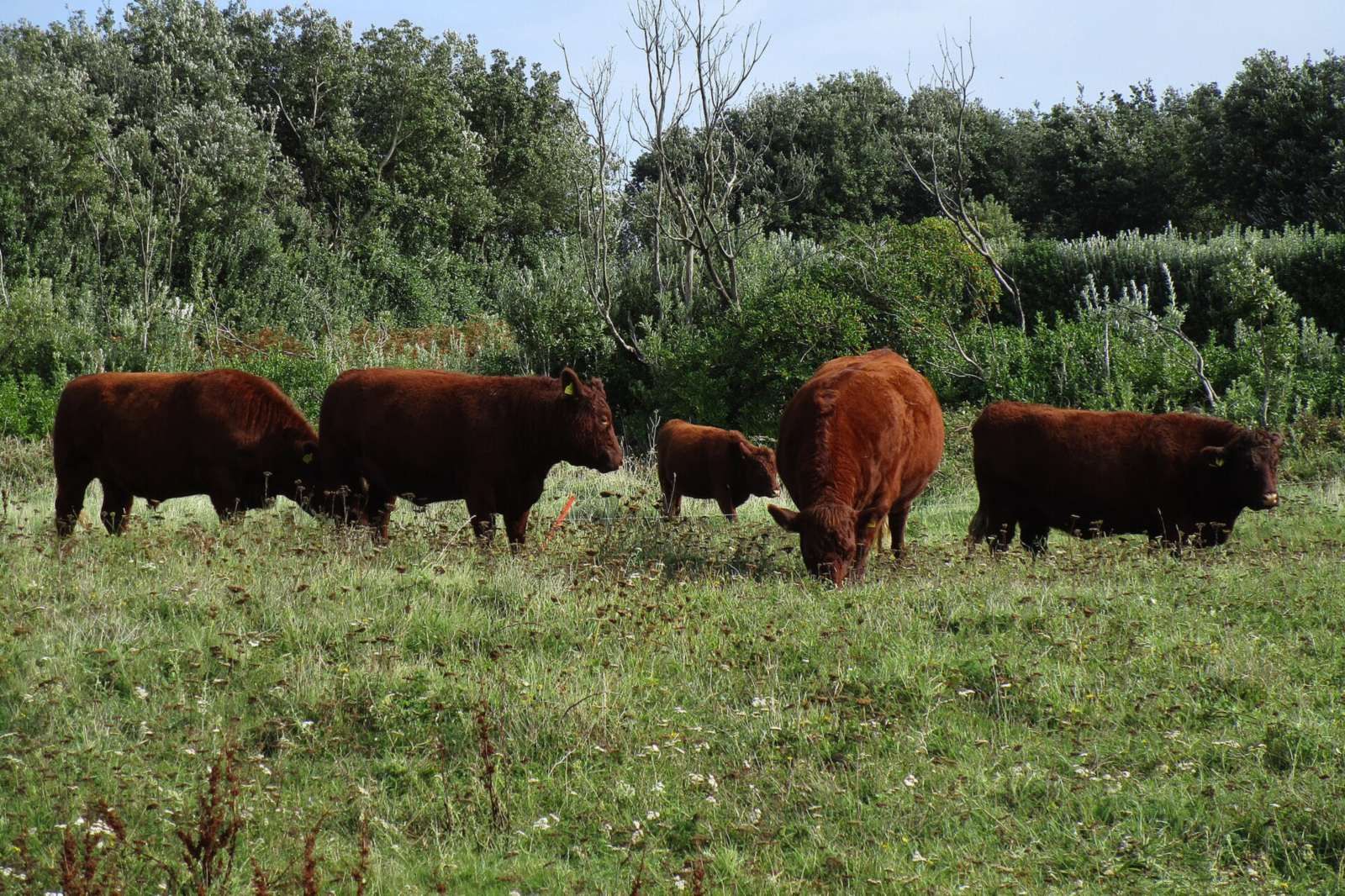
I have already written about the ideas behind regenerative farming in the UK, about the gatherings and the shops, about the Cherry family at Lannock, and about the Pasture for Life mark that tells you an animal has lived on pasture for its whole life. This piece is about the graziers themselves, and about how that way of farming is spreading, farm by farm, from a hidden Devon valley to the Scottish Borders, West Wales and the County Down shore.
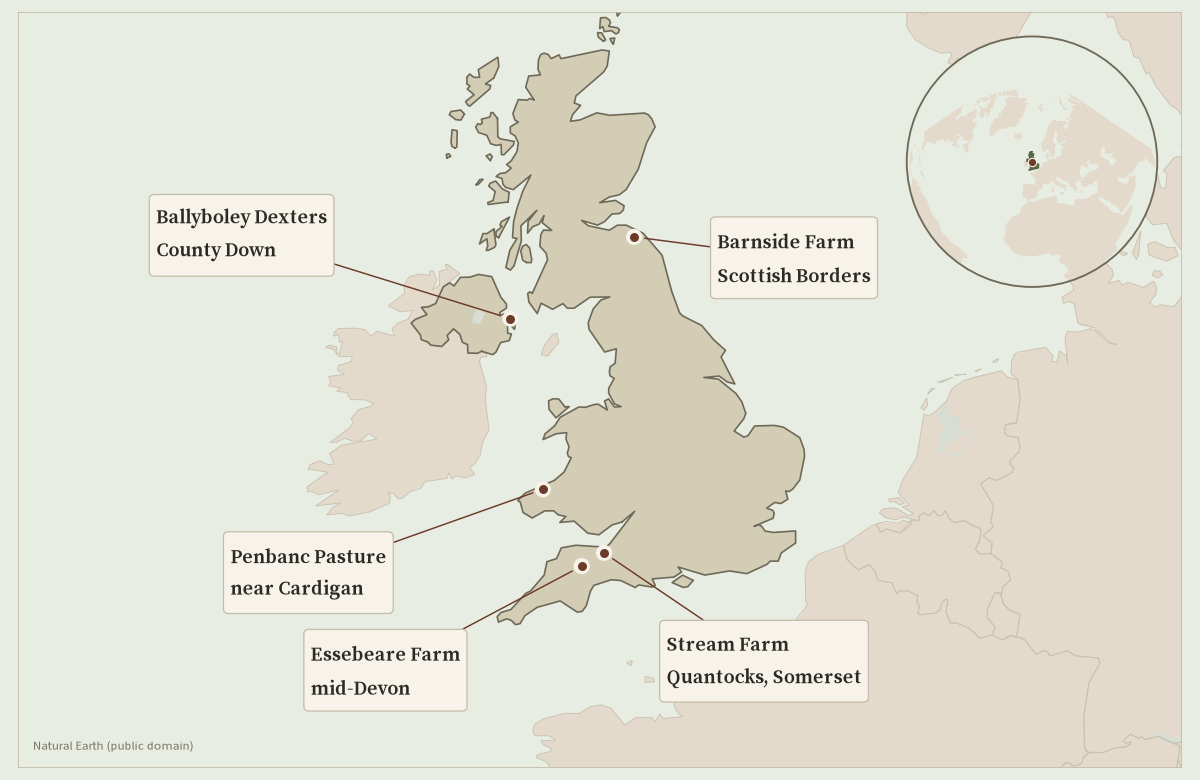
There is no single official badge for “regenerative”. What joins these farms is a habit: moving cattle and sheep so the grass can rest, often on a 100% pasture diet, with neighbours and networks close at hand. Pasture for Life, the Nature Friendly Farming Network and the Soil Association are part of that thread. I went looking for farms in all four nations, and in the south-west I found more than one.
A Devon valley, and the neighbours next door
Essebeare Farm sits in a valley at Witheridge, in mid-Devon, on ancient Culm grassland, inside the North Devon Biosphere. The farm is in the Domesday Book. It runs to 90 hectares, and it is certified organic and Pasture for Life. Native Red Ruby and Hereford cattle, and hardy Lleyn sheep, graze it in rotation. There are thick hedges on long rotations, trees for shade and shelter, and hay meadows that have gone from six plant species in a square metre to 15 in only five years.
Olly Walker came to farming late and a little sideways. He had been an artist and filmmaker, and had helped run a social enterprise in Scotland, when, in 2013, the chance to take on Essebeare arrived. He retrained, and the farm became a family partnership with his wife, Rachel, and with Mary Hosier, who looks after the cattle. They gained organic status in 2018. Half the land is now rotationally mob-grazed pasture of grasses, legumes and deep-rooting herbs, the kind of close, moving grazing that Allan Savory has long championed. Thirty percent is restored species-rich Culm hay meadow, and the rest is wilder ground, woodland and wet fen, left more to its own devices.
Essebeare does not sit alone. It is part of Dayshul Brake, a rewilding cluster: a handful of neighbouring holdings sharing livestock, seed, tools and a map of the habitats they hold in common. Dorette Engi and her daughter Eti Meacock bought Broadridge Farm in 2019. Val Green has lived next door for decades, and is proud of a little jewel of Culm grassland she has cared for through the years. Olly’s Red Rubies now cross the boundaries on purpose, to graze the neighbours’ ground as well as his own. I like that Essebeare is still a working livestock farm in the middle of it all.
Upland grass in the Borders
Far to the north, in the Lammermuir Hills, Charley and Andrea Walker run Barnside Farm at Abbey St Bathans, in the Scottish Borders, with help from their children, Tom and Jessica. It is a different family, and a different kind of country: 625 acres of upland organic beef and sheep, with 500 Easycare ewes and 100 Welsh Black Angus cross suckler cows, on a low-input, grass-fed system.
Since 2014 they have grazed native-breed stock on a rotational paddock system, moving the animals to fresh pasture every two or three days. Output has risen by almost 50%. Each paddock gets a long rest before it is grazed again, and the plants put down a better root. They have planted more than three kilometres of hedgerows, as wildlife corridors and as shelter for the stock, and they have added native trees to help expand the ancient oakwoods of the Abbey St Bathans Site of Special Scientific Interest. The water margins of the River Whiteadder and the Monynut Water have been fenced, so the banks can grow.
Charley is plain about why they changed course. They had been drawn into a system with a lot of inputs, and taught that high productivity meant high profit, which they have not found to be true. Now they try to replace fertiliser, grain and extra labour with better management, and they measure success by the living they make and by the effect on the land. “Our whole farm is a habitat and it’s all linked. There are benefits to species and it makes me happy.”
I was glad to find the Soil Association and Scotland’s Farm Advisory Service writing and talking about the farm, so other upland farmers can hear how it is done.
New hands, old pasture, in West Wales
Penbanc Pasture is much smaller: 16 hectares of grass in the Pembrokeshire Coast National Park, just south of Cardigan. Kate Bradshaw only started farming in 2017, after a career in broadcasting and digital media, to produce good food from healthy soil and happy animals. Her way of farming is as old as agriculture itself: no artificial inputs, and as little interference as possible. The land is chemical-free, and her native-breed cattle and sheep eat grasses, herbs and hedgerows. The herd is of Original Population Traditional Herefords, small, thrifty cattle that live well on pasture. Tamworth pigs roam the woods.
The farm is certified Pasture for Life. Kate found certification straightforward, and it is the only mark she carries. She now also works for the organisation as Marketing and Operations Director, which I find a hopeful sort of circle: a new-entrant farmer, on a modest acreage, helping other graziers tell the same story.
Dexters on the County Down shore
On the other side of the Irish Sea, Ballyboley Dexters is a family herd on two stretches of County Down coastal land: Orlock Farm, looking over the Irish Sea and Belfast Lough, and ground at Greyabbey on the shores of Strangford Lough. It began in 2009 with two Dexter heifers. Stephen Alexander and his family have grown the herd slowly, to around 130, mainly pedigree Dexters, with a handful of Belted and Black Galloways. The cattle graze outdoors all year, in family groups, on pasture of grasses, wildflowers and herbs, and on the browse in the hedges. In winter they eat haylage and silage made on the farm.
They are certified Pasture for Life, and they are members of the Nature Friendly Farming Network. Stephen chairs the network’s Northern Ireland steering group. They farm with no artificial fertilisers, pesticides or herbicides, and they use conservation grazing on land that includes Areas of Outstanding Natural Beauty and Sites of Special Scientific Interest, moving the cattle with an eye on wild flowers and on birds that nest in the grass.
One of their larger pieces of work has been at Orlock, where they took on the first long-term tenancy with the National Trust in Northern Ireland. The ground had been intensively cropped. It is now grazed pasture, and the insects, birds and pollinators have come back strongly. About ten years ago the family also began selling their beef directly, to keep a fairer hold on the value of the animals they had raised so carefully. I like the picture of a family talking to other farmers, and to the people who eat the meat.
A valley of small farms in the Quantocks
Back in the south-west, high in a hidden valley of the Quantocks in Somerset, Stream Farm builds the spreading of the work into the farm itself. The 260-acre holding is owned by Rupert and Sarah and managed by Will and Charlotte. It is certified organic and Pasture for Life. The aim is to show that the countryside is better served by a large number of small farms selling direct than by a few huge ones selling to the supermarkets.
So they make room for new entrants. Eight businesses run on the farm. Each is led by a share-farmer, self-employed, with a stake in the enterprise, who learns the work over a couple of years or more. Together they produce organic beef, lamb, pork, chicken, eggs, apple juice and raw honey, and trout from ponds fed by the stream, and they sell each week to customers in the local area and in Bristol. The pedigree Dexter cattle and Hampshire Down sheep graze grass and clover leys through spring, summer and autumn; in winter the cattle eat haylage grown on the farm.
I was struck by how practical this is. A young farmer without land can still begin, and a household in Bristol can buy from a valley it could visit in an afternoon.
What the five farms share
None of these places is a copy of the others. What they share is the decision to move the animals and leave the grass time to stand up again, and, on four of the five, the Pasture for Life mark I wrote about in my earlier UK guide. The spread I have been following moves through a cluster like Dayshul Brake, through a network like the Nature Friendly Farming Network, through a mark that shoppers can learn to look for, and through families who are happy to show a neighbour how they graze. I find that a lovely way for good farming to travel, from one valley to the next.
Frequently asked questions
Are all five of these farms certified Pasture for Life?
Essebeare, Penbanc, Ballyboley Dexters and Stream Farm are. Barnside Farm is certified organic and grass-fed, and has worked with the Soil Association in Scotland.
What is a farm cluster, as at Dayshul Brake?
It is a group of neighbouring landowners who agree to work together, sharing livestock, seed, tools or a plan for habitats, so the good done on one holding can carry on over the boundary. At Dayshul Brake, Essebeare remains a working livestock farm inside that mix.
Do these farms welcome visitors?
Some do, in different ways. Essebeare welcomes young people and other visitors by arrangement. Ballyboley has hosted walks and on-farm events. Penbanc offers collection from the farm, and a stay on the farm. Stream Farm sells weekly to local customers and to Bristol. Do check with each farm before you go.
Sources
- Essebeare Farm
- Rewilding Britain, “Meet the rewilders: Dayshul Brake”
- Barnside Farm
- Soil Association, “Higher output with regenerative grazing”
- Farm Advisory Service, “Barnside Farm – Becoming Organic, Rotational Grazing, and Mob Grazing,” 9 December 2020
- Ballyboley Dexters
- Nature Friendly Farming Network, “More than growing Dexters”
- Penbanc Pasture
- Sara Gregson, “Delivering the flavour of West Wales farming certified ‘Pasture for Life’ beef and lamb,” Farmers Guardian, 21 March 2024
- Pasture for Life, “How to become a Certified Enterprise,” including Kate Bradshaw, Penbanc Pasture
- Pasture for Life, Annual Report to Members 2023-24, naming Kate Bradshaw as Marketing and Operations Director
- Stream Farm, The Farm
- HG Walter, “Stream Farm”
- Pasture for Life, homepage
- Nature Friendly Farming Network, homepage