
Coming Full Circle in Georgia: Will Harris and White Oak Pastures
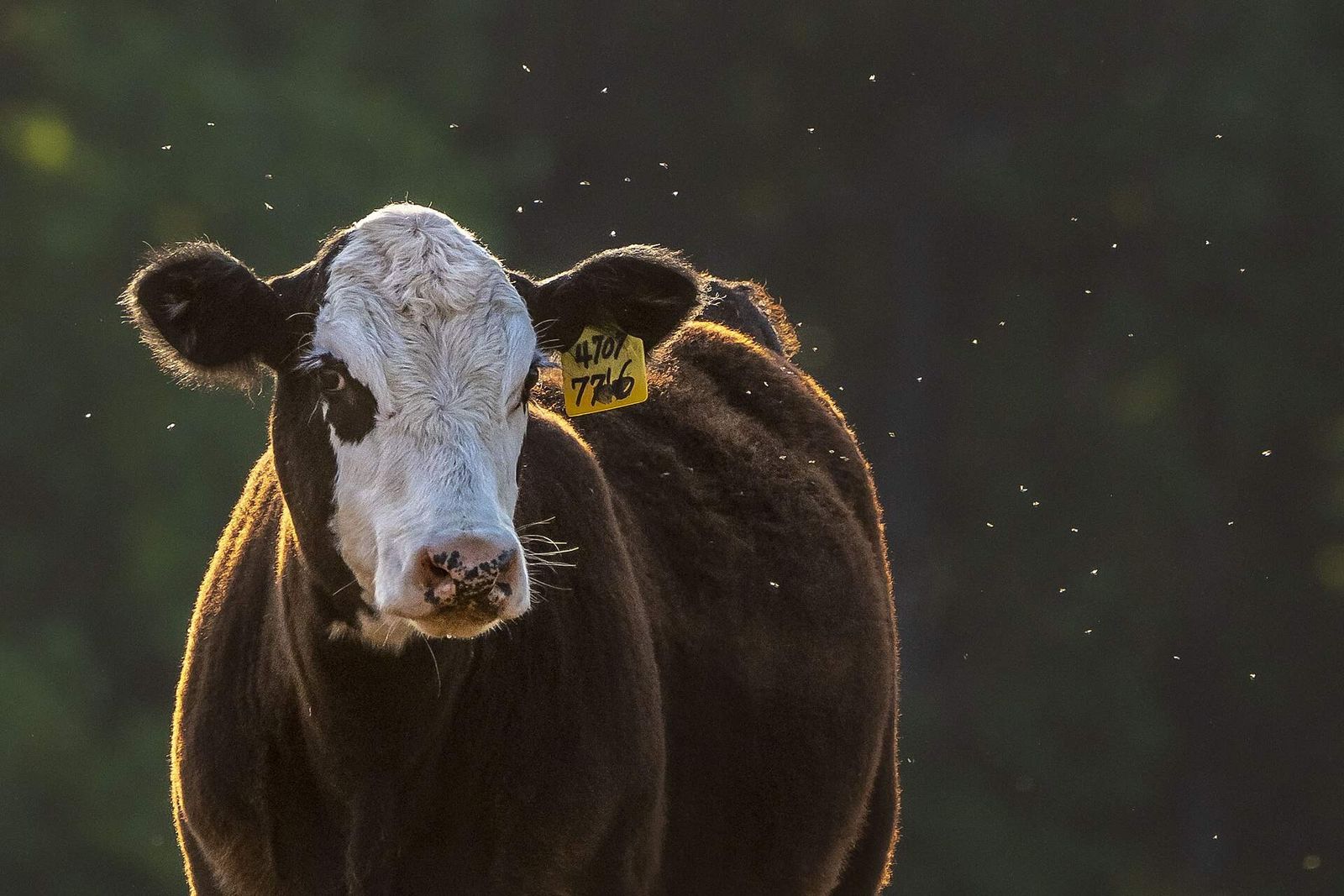
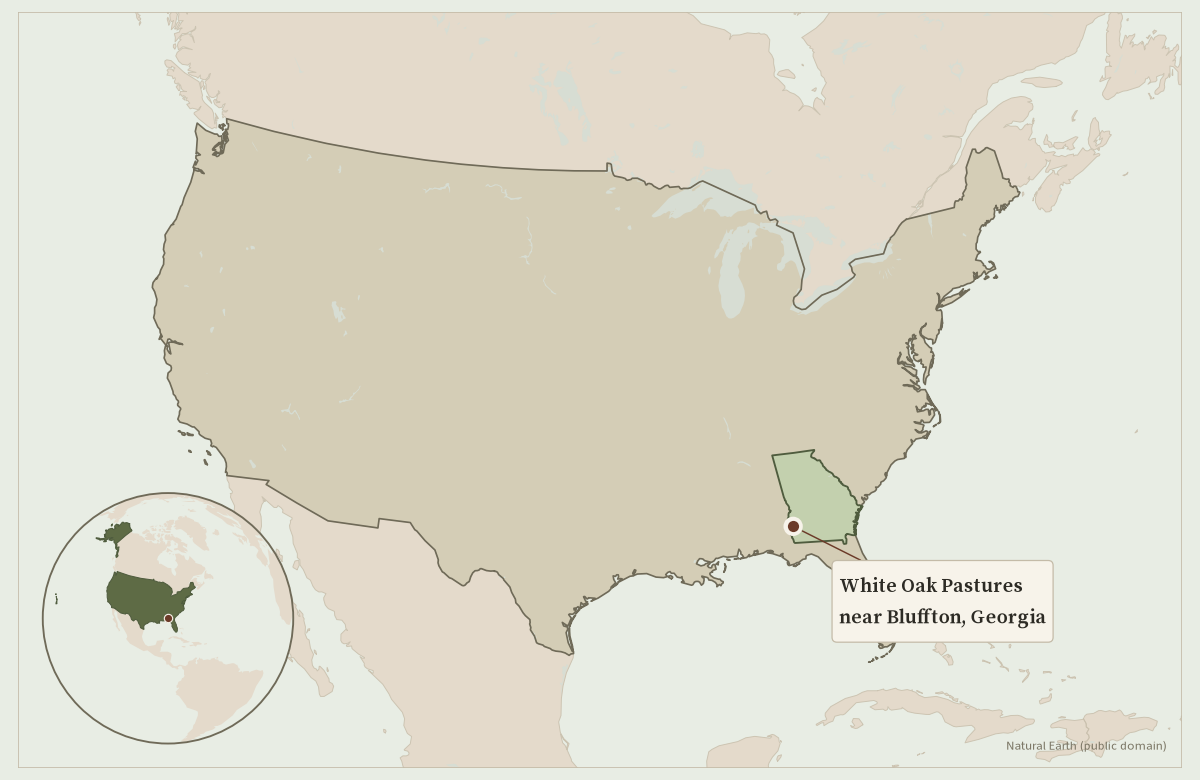
In the south-west corner of Georgia, in the little town of Bluffton, the Harris family has farmed the same land since 1866. White Oak Pastures is a farm of grass and livestock: cattle and sheep living on pasture, pigs and poultry out of doors, and two slaughterhouses on the farm itself, so the animals do not have to travel far at the end of their lives.
I came to the story through Will Harris, the fourth generation on the place. For years he sent calves into the industrial beef system, just as his father had done. Then he turned the farm back to grass and found a way to sell the meat himself. Along the way he put work back into a town that had almost faded away. The farm now calls itself a six-generation family farm. His daughters, Jenni Harris and Jodi Harris Benoit, work there with him.
The challenge
The farm was founded by James Edward Harris soon after the American Civil War. In the early twentieth century, according to the family’s own account, his son Will Carter Harris was already butchering a cow, some pigs and a few chickens most mornings, and hauling the meat three miles by mule wagon into Bluffton, to the general stores and the hotel. After the Second World War, Will’s father, Will Bell Harris, took a different path. Farm chemicals arrived, slaughter moved to distant factories, and the farm came to produce only calves for the industrial system.
Will Harris has said he never wanted to do anything else but run the farm. He took a degree in animal science at the University of Georgia in 1976, worked for the poultry firm GoldKist, then came home and helped his father for more than twenty years before taking over in the early 1990s. For a time he farmed the same way, with grain, fertiliser, pesticides and routine antibiotics. In a university profile he recalled that the things that had excited him fresh out of college became less exciting, as he began to see what he called the “unintended consequences” of those methods.
What changed
According to the farm, the turn began in 1995. The cattle went back onto grass, and grain feeding, hormone implants and routine antibiotics were given up. Chemical fertilisers and pesticides followed in 2000. The farm has said the change was painful for the finances.
The next problem was slaughter. If you are going to sell your own grass-fed beef, you need a butcher you can trust, and one close enough that the animals are not hauled across the country. In 2005 the family built a government-inspected abattoir for red meat on the farm. The farm says there was only one other like it in the country at the time. It was a big risk. In 2008 they added sheep, so the farm would not depend on cattle alone. Chickens and turkeys arrived in 2010, along with organic vegetables grown with compost made on the farm. In 2011 they built a second abattoir, for poultry. According to the farm, that made White Oak Pastures the only farm in the United States with both on site, each under official inspection.
The animals are moved around the farm so that each field gets a rest, the kind of planned grazing I keep coming back to on this site. Cattle often go first, then smaller livestock, then the birds, which scratch through the dung and spread it. Anyone who has read my piece on Joel Salatin will know the pattern. Pigs and chickens cannot live on grass alone, so, like all pigs and poultry, they get some extra feed as well. The cattle and the sheep, the farm says, are certified grass-fed by the American Grassfed Association. Some of the cattle are born on neighbouring farms in a local group, and all of them are slaughtered at White Oak Pastures.
Little is wasted. Hides become leather, fat becomes tallow goods, and what cannot be eaten is composted and returned to the grass. Harris told the story himself in A Bold Return to Giving a Damn, published by Viking on 10 October 2023, and he has set up a not-for-profit to teach other farmers. He likes to say he has never had an original idea in his life. He has just been, in his words, “a very aggressive implementer.”
What they report
Bluffton is tiny. On the farm’s figures it has 103 people, and when industrial farming drew families away, its old general store closed in the 1960s. In 2016 the Harris family restored it. According to the farm, White Oak Pastures now covers almost 5,000 acres and employs more than 160 people, making it the largest private employer in one of the poorest counties in Georgia, with staff paid at least twice the county average. The store, they say, is the only place within ten miles to buy everyday goods, as well as the farm’s own meat. There is a restaurant on the farm, and cabins for guests who want to stay and see the work.
In the university profile, Harris was frank about the money. This is, he said, “a very break-even business,” with a great deal of capital tied up. Even so, he was “very pleased with what we are doing.” I find that honesty warming, and I think a small town with work in it says more about the farm than any balance sheet.
What a farmer here can borrow
A small UK farm will not look like 5,000 acres of Georgia, and it will not easily have two slaughterhouses at the end of the lane. British winters are wetter, and the rules on slaughtering on the farm are tighter. That need not put anyone off. You can still keep cattle and sheep on grass, move them so the pasture can recover, and, where you can, sell your own meat through a local abattoir and a farm shop. You can keep more than one kind of animal, and keep the work close to home. My guide to regenerative farming in the UK has some farms here doing just that.
Frequently asked questions
Can you visit the farm?
Yes. According to the farm, there is a restaurant on the place, a general store in Bluffton, and places for guests to stay, including cabins and a park for motorhomes. Check the farm’s website for current details.
Are all the animals grass-fed?
The cattle and the sheep are certified grass-fed, according to the farm. Pigs and poultry live on pasture and, the farm says, are certified non-GMO, and, like all pigs and poultry, they get some extra feed.
How is the meat sold?
The animals are butchered on the farm and the meat is sold by White Oak Pastures itself, online and through its own shops, along with eggs, organic vegetables, and goods made from hides and tallow.
Sources
- White Oak Pastures, homepage
- White Oak Pastures, “Our Tradition”
- White Oak Pastures, “Our Commitment”
- White Oak Pastures, “Our Core Values”
- Maria M. Lameiras, “A Bold Plan,” University of Georgia CAES Field Report
- Will Harris, A Bold Return to Giving a Damn, Viking, 10 October 2023
- Successful Farming, “40 Seasons: Farm Transformed”