
Joel Salatin and Polyface Farm: The Grass Farmer of the Shenandoah
I think of Joel Salatin as one of the original grass farmers, and as an inspiration to a great many others. A lot of British readers, myself included, first met him through Michael Pollan’s 2002 visit to Polyface Farm in Virginia’s Shenandoah Valley, and later through The Omnivore’s Dilemma and the film Food, Inc., as Carleton College noted in 2012. What stayed with me was a farm you would want to eat from: cattle on fresh grass, hens coming in behind, and a man who made that way of farming look possible.
He did not keep the lesson to himself. Through practical books, talks, an open farm, and those widely read accounts, he has helped a generation of farmers imagine a living from livestock on grass. I cannot count the number, and I would not invent one. I can say that his influence is easy to find, in fields a long way from Virginia. That, for me, is the heart of the story.
A family farm on tired land
In 1961, William and Lucille Salatin moved their young family to the Shenandoah Valley and bought a farm near Staunton. The family’s own wording is blunt. It was, they say, “the most worn-out, eroded, abused farm in the area.” They planted trees, built compost, dug ponds, and began moving cows daily with portable electric fencing. They invented portable shelters so livestock could live on mixed, perennial pasture. The work now supports three generations. Joel still co-owns the farm with his family, and his son Daniel is listed as range boss. His own site calls him editor of The Stockman Grass Farmer.
It is a working family farm, not a museum, and it is still doing the thing that first caught Pollan’s eye.
The daily work on the salad bar
Salatin calls himself a grass farmer, and Pollan heard him say it. Healthy grass comes first. The animals, and the supper, follow from that.
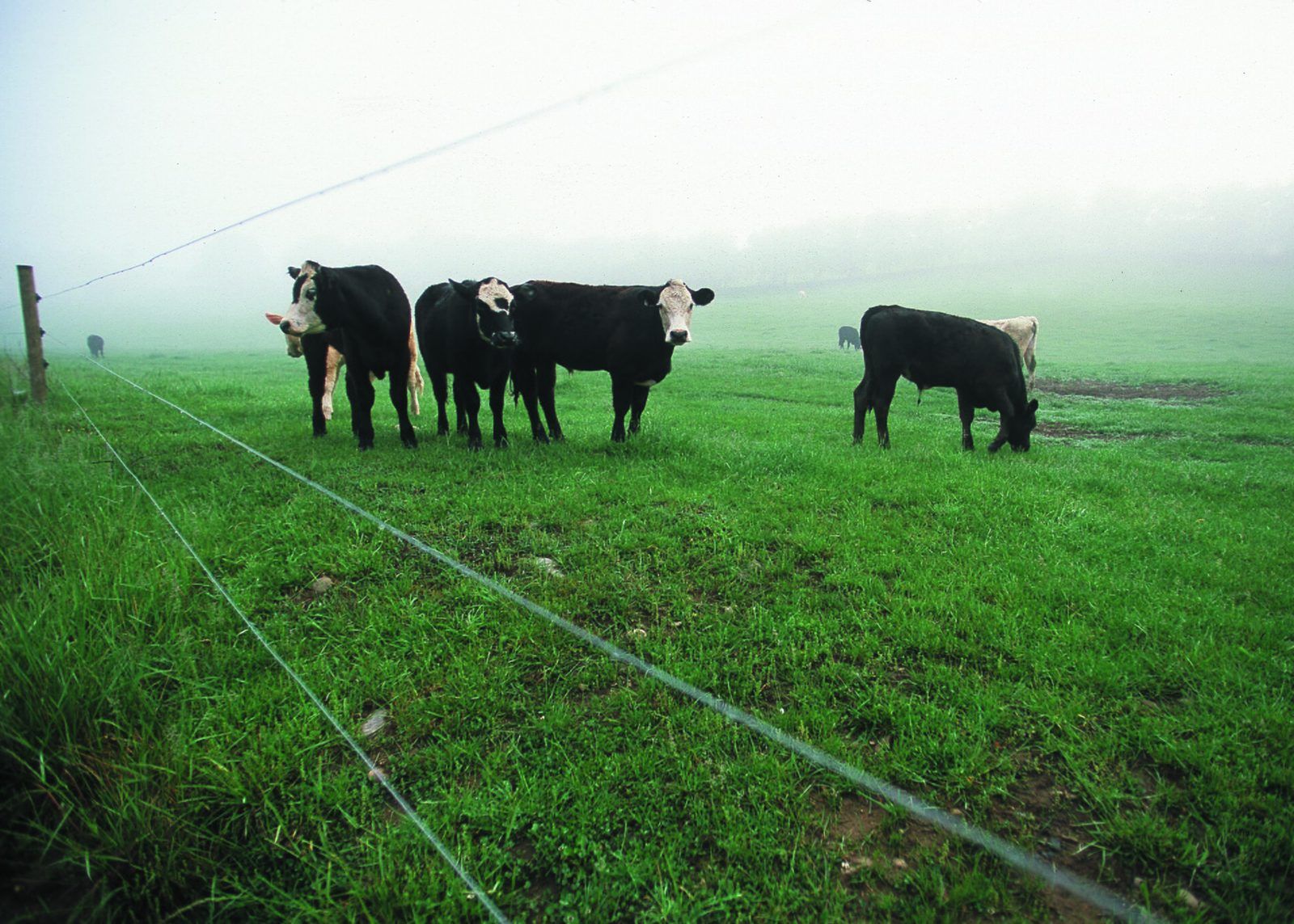
The farm calls its pastures a “salad bar,” and moves livestock and poultry frequently onto fresh ground. The cattle are moved daily to new grass, and they are always 100 per cent grass-fed and grass-finished. No grain. No feedlot finish. Just grass, and the rest that grass needs in order to grow back strong.
Then come the birds. The farm says its laying hens spend their days on pasture, often following the cows. Pollan watched a portable coop he called the eggmobile come in after the cattle. The birds spread the manure, picked through the cowpats, and left eggs behind. Pastured broilers, turkeys and ducks are raised outdoors in the same spirit, in portable shelters moved onto fresh ground.
The pigs have a job too. Pollan described the farm’s “pigaerators”: in winter the cattle are bedded on a deep pack, and in spring the pigs are let in to root it, turning the pack into compost for the grass. Salatin, Pollan wrote, liked that sort of farm machinery: it never needs its oil changed, and when you are done with it, you eat it. The farm sells the result as pastured pork. Among its guiding principles is a phrase of Salatin’s that has travelled a long way: honouring “the pigness of the pig.” I like it because it treats the animal as more than a unit in a shed.
Chickens and pigs are not ruminants. They cannot live on grass alone the way cattle can, and they have always needed some supplementary feed. That is normal. It is how those animals work. It does not take anything away from the cattle on the salad bar, or from the good sense of giving hens and pigs a life outdoors and a proper job.
This picture of animals bunched, moved, and then given time to let the grass recover sits close to Allan Savory’s planned grazing. Salatin has his own language and his own inventions, but the heart of it is the same hopeful idea.
Books, talks, and an open gate
A good farm is one thing. A farm that teaches is a larger one. Salad Bar Beef was published on 9 July 1996. You Can Farm, a practical encouragement to people who dreamed of making a living from the land, followed on 18 August 1998. Many other books have come since. His own site puts the count at 16, and describes a life spent as comfortably moving cows as speaking to a room. I am glad he wrote them, and glad he kept talking. Plenty of farmers have found their way onto grass because they read him, heard him, or walked his fields.
The farm says anyone may visit: “No trade secrets, no locked doors.” Tours run Monday to Saturday, with self-guided visits, private walking tours, and hay-wagon “Lunatic Tours” that stop at the pastured animals. According to the farm, it receives hundreds of visitors a week. According to his own site, the farm serves more than 5,000 families, plus restaurants and shops. I find that openness attractive. It is one reason the idea travelled so far.
A small holding in Britain will not look like the Shenandoah, and the weather is different. What a farmer here can borrow is the idea itself: move the cattle, let the birds follow, give the pigs a job, and put good meat on the table. That travels, even when the fields and the season do not.
What I take from it
I would eat the beef. In my view, beef and lamb from grass are the superior meats.
Polyface also offers grass-fed milk and cheese through a partnership with a local organic dairy. The meat and eggs are the farm’s own. The milk comes with a neighbour. I like that clarity.
What I carry away is simple. Cattle belong on grass. Birds and pigs can have a proper outdoor life, even though they still need their feed. And one Shenandoah family farm, by staying open and writing it down, has helped a great many other farmers believe they could try it too.
Frequently asked questions
Where is the farm, and can you visit?
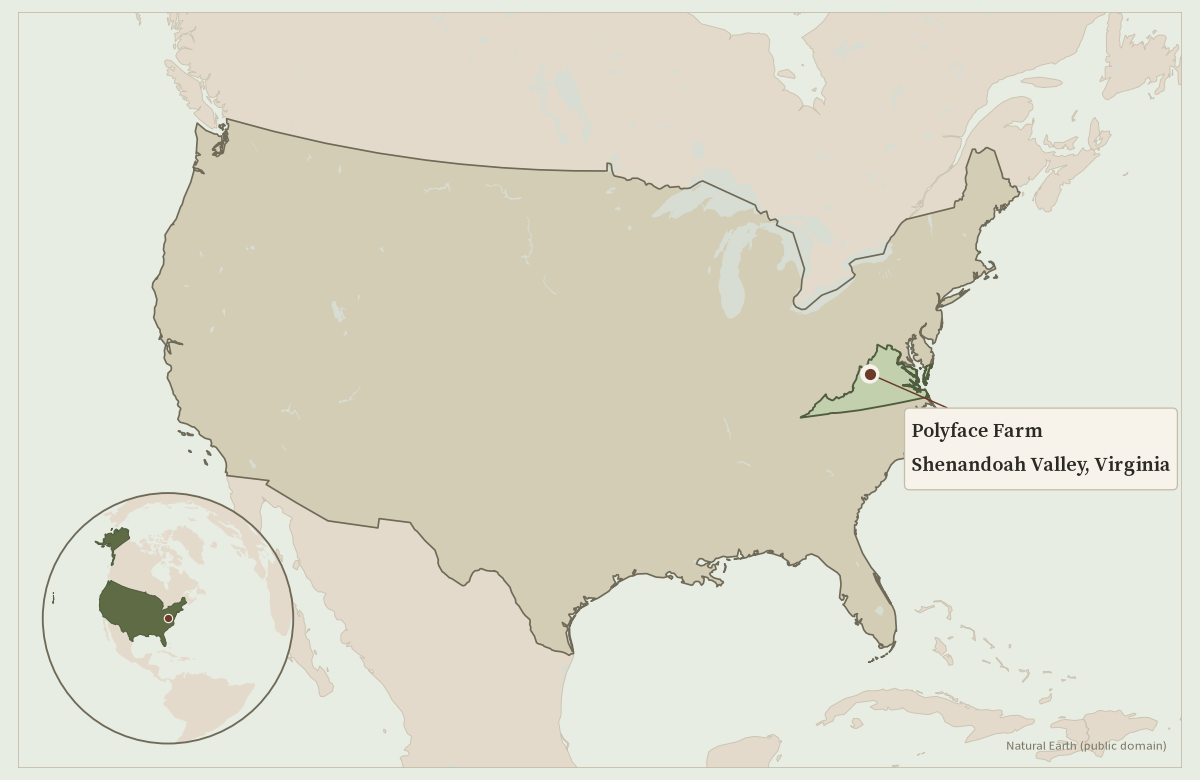
Polyface Farm is at Swoope, in Virginia’s Shenandoah Valley. According to the farm, it is open Monday to Saturday for self-guided visits, with paid walking tours and hay-wagon “Lunatic Tours” as well. Check the farm’s tours page for current details.
Does Polyface produce its own milk?
The shop offers grass-fed milk and cheese, but the farm says this comes through a partnership with a local organic dairy. The beef, pork, poultry and eggs are theirs.
Which book should I start with?
Salad Bar Beef if you care about cattle on grass. You Can Farm if you want the practical encouragement he offered to people hoping to make a living from the land.
Sources
- Polyface Farm, “The Story of Polyface Farms”
- Polyface Farm, homepage and guiding principles
- Polyface Farm, 100% grass-fed beef
- Polyface Farm, pastured eggs
- Polyface Farm, pastured pork
- Polyface Farm, pastured chicken and turkey
- Polyface Farm, grass-fed dairy
- Polyface Farm, farm tours
- Joel Salatin, “About,” The Lunatic Farmer
- Michael Pollan, “Sustaining Vision,” 2002
- Carleton College, “High Priest of the Pasture” to Present Carleton Convocation, 10 February 2012
- Penguin Random House, Salad Bar Beef by Joel Salatin
- Penguin Random House, You Can Farm by Joel Salatin