
The Grass and the Great Herds: A World Before Agriculture
For a very long time, the world’s grasslands grew up with great wild herds. The grass and the animals shaped one another, and a good deal of the deep soil now farmed was built under their hooves. I love this older story, and I think it is worth remembering whenever farm animals and the land come up together.
Grass that grew with the herds
Grasses have a simple gift. They grow from the base, close to the ground, so a bite that takes the leaf does not kill the plant the way nipping the growing tip of a young tree can. The growing points sit low, and after a graze the plant can send up new leaves. It is built to lose a leaf and grow again, so long as it is not bitten to the roots and left with no rest.
A herd does more than eat. It tramples old, dry growth against the soil, so it can rot rather than stand as a thatch. It leaves dung and urine, which feed the grass again. And it moves on, because the animals are walking, or because something is pushing them, and the plants get time to grow back. A short, heavy visit followed by a rest is the old rhythm of living grassland.
A country full of animals
I find it easiest to start with a country that no longer exists in the same form. In the last ice age, a vast stretch of grassy land ran from Europe across northern Asia and into North America. People call it the mammoth steppe. It was dry and grassy, and it supported a great number of large animals: woolly mammoths, bison, wild horses, saiga and woolly rhinoceros. The herds ate, trod and dunged as they went, and the soil built under them.
The same kind of work was done by animals that are easier to picture. The aurochs was the wild ancestor of today’s cattle: a huge, horned beast that roamed Europe, Asia and North Africa. The last known aurochs died in 1627 in the Jaktorów Forest in Poland, driven out by hunting and the loss of its habitat, and the species is listed as extinct. Aurochs lived in Britain too. At Formby, on the Lancashire coast, 9,000-year-old footprints of people walk among those of aurochs and other animals. Every dairy cow and every beef steer in a British field is, in the end, a descendant of that wild herd.
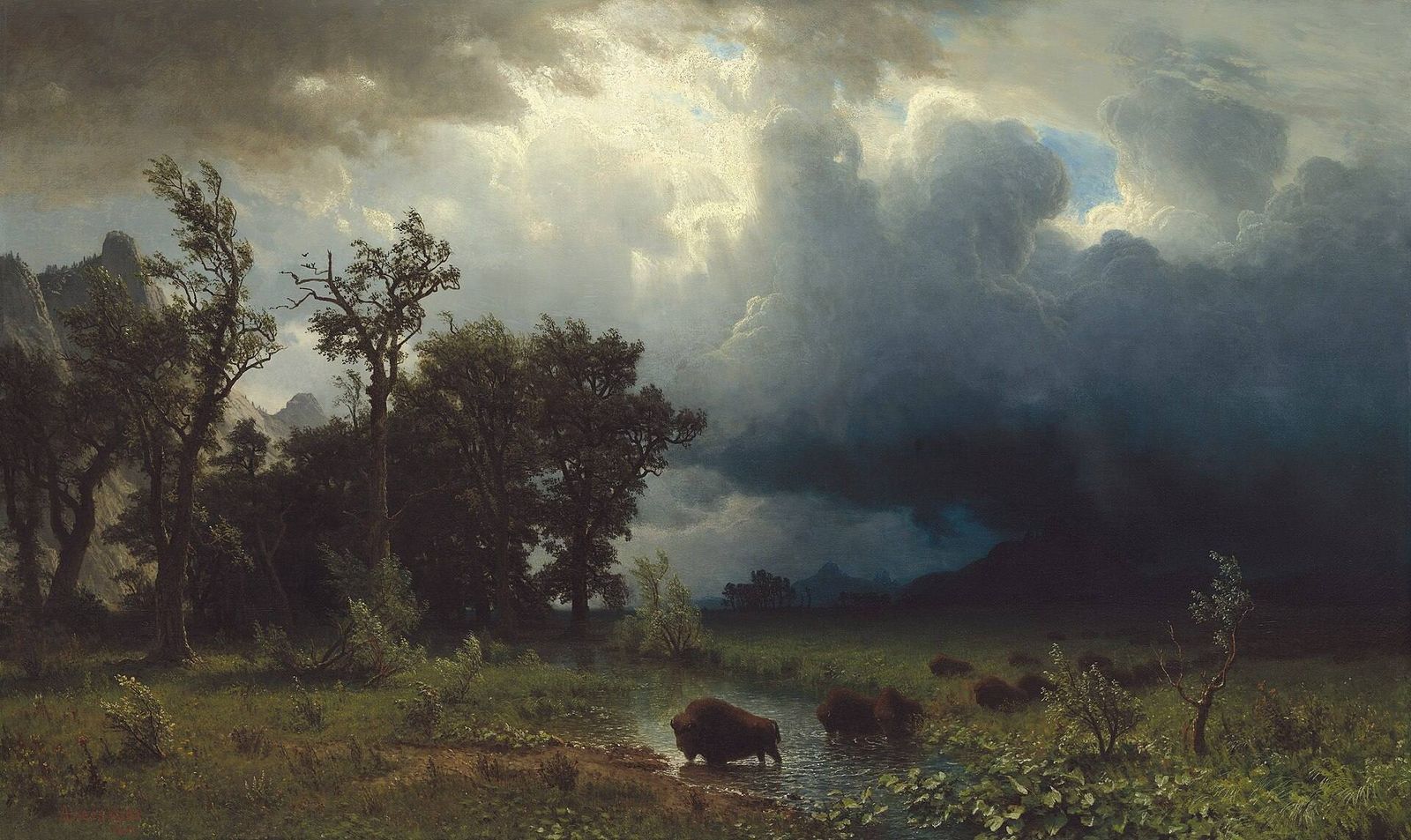
In North America, the animal that did the great work was the bison. Before European settlement, tens of millions of them ranged across the continent, farther than any other large native grazer. They ate, moved on in search of grass and water, and left a patchwork of vegetation and soils behind them. Insects and bacteria broke down their dung and returned nutrients to the ground. Seeds caught in their shaggy coats fell in new places. And they made wallows: bowl-shaped hollows in the turf, rolled out as dust baths, which later held rain and became small wet places for other plants and creatures. Wallows were once a common feature of the Great Plains.
Those millions did not last. The bison were hunted on a huge scale in the nineteenth century, and by about 1900 fewer than a thousand remained. Some herds have been rebuilt in parks and on ranches, though the free-ranging millions are gone.
Some great herds still walk. In East Africa, more than a million wildebeest move through the Serengeti and the Mara each year. In the 1970s, the ecologist S. J. McNaughton watched what happened when they passed. They took down a great deal of standing grass, and the plants then grew more. Thomson’s gazelles later came to feed on those fresh swards. A later study, with colleagues, showed that the herds also speed the return of nutrients, including nitrogen, to the soil. The old work goes on there every year: a dense, moving graze, a rest, and grass that comes back strong.
On the Eurasian steppe, the saiga played a similar part. It is a strange, bulbous-nosed antelope, built for long journeys over dry grass. Historic herds numbered in the millions. They were hunted almost to nothing more than once, and some herds have since grown again. The species is now listed as Near Threatened, with numbers rising, though fences and roads still cut some of their walks.
Hunting, the plough and the fence
At the end of the last ice age, many of the largest animals disappeared, mammoths among them. Later, people hunted the remaining herds very hard. The aurochs was gone from Britain long before the last one died in Poland, hunted out and squeezed by farming. Then the plough turned prairie and steppe into fields, breaking the turf and the deep grassroots that had held the soil. Fences stopped the long walks that had kept the herds moving, so animals could no longer leave a place and let it recover as they once did. A grassland grazed too long in one place, or not grazed at all, or turned over year after year, is a different kind of land.
Putting a herd back to work
The hopeful part of the story is that some of that old work can be done again. When cattle or sheep are kept together, moved on after a short graze, and the grass is given a proper rest, they can eat, trample, dung and move in something closer to the old rhythm. Allan Savory has spent a lifetime championing that, and many graziers now practise regenerative grazing in their own way.
A Devon valley or a Kazakh pasture will never be the mammoth steppe or a Serengeti migration, and a British field will never hold aurochs in a wild wood. It can still have a bunch of cattle or sheep, moved with care, on grass given time to grow back. That is a very old partnership, and the land already knows it.
I find that history a comfort. The grasslands were full of animals long before the plough arrived, and I love to see a little of that work given back to them.
FAQ
Did hunting wipe out all the great herds?
No. Many of the largest animals had already disappeared at the end of the last ice age. Much later, people hunted the aurochs to extinction, brought the American bison to the edge of it, and more than once nearly wiped out the saiga. After that, the plough and the fence changed the grasslands again.
Are farm animals the same as the old wild herds?
No. A dairy cow in a British field is a descendant of the aurochs, not an aurochs, and many farm animals today never live as a wild herd once did. The useful likeness is in the work. When cattle or sheep are bunched, moved on after a short graze, and the grass is left to rest, they can eat, trample and dung in something closer to that older pattern.
Do any of these wild herds still exist?
Yes, some of them. More than a million wildebeest still migrate through the Serengeti and the Mara. Saiga herds have grown again on the Eurasian steppe, though fences still block some of their journeys. Bison have been brought back in smaller numbers in parks and on ranches. The aurochs is extinct, and cattle are what remain of it. The woolly mammoth is gone.