
Leaving the Grass to Rest: The Nerbas Family of Shellmouth, Manitoba
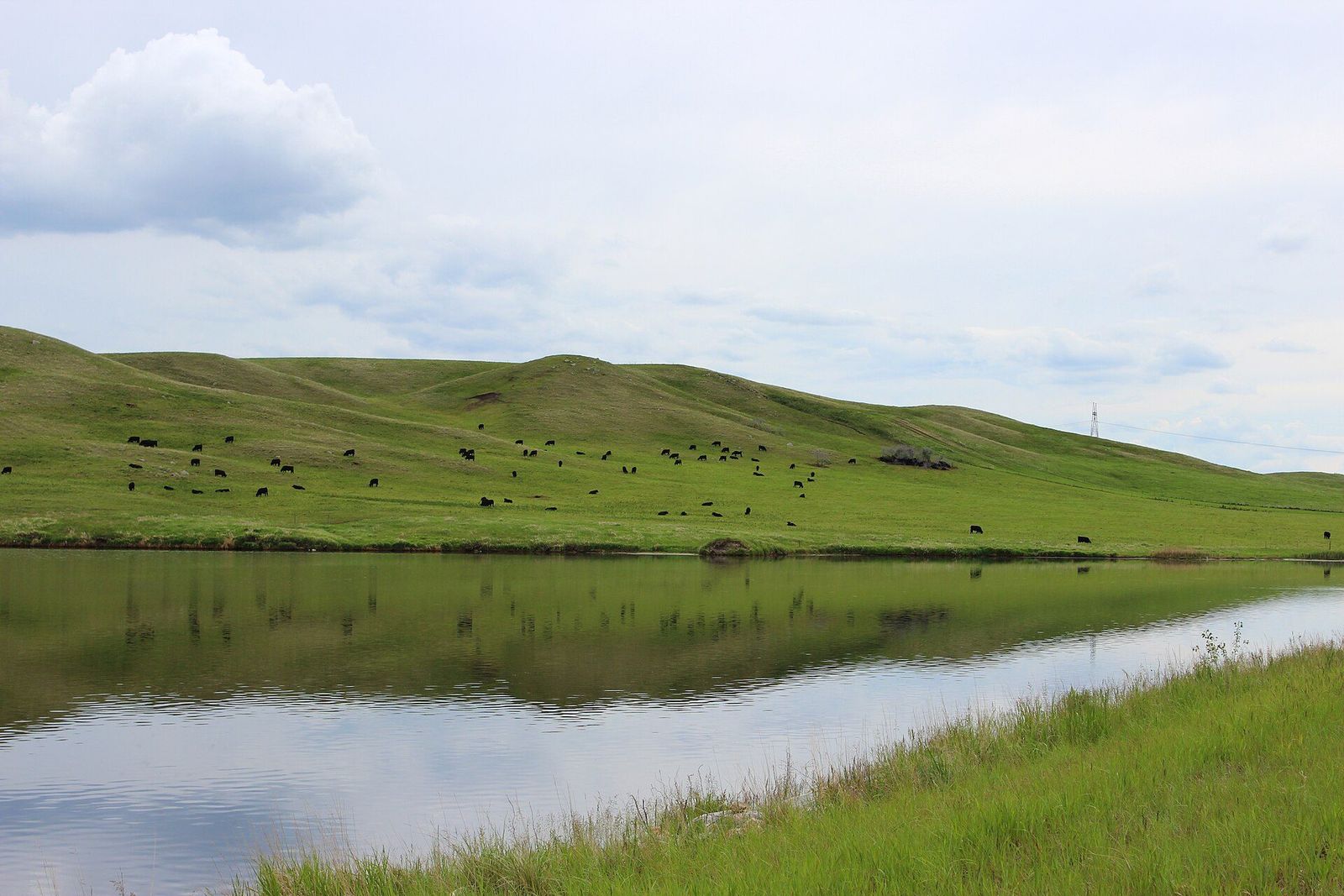
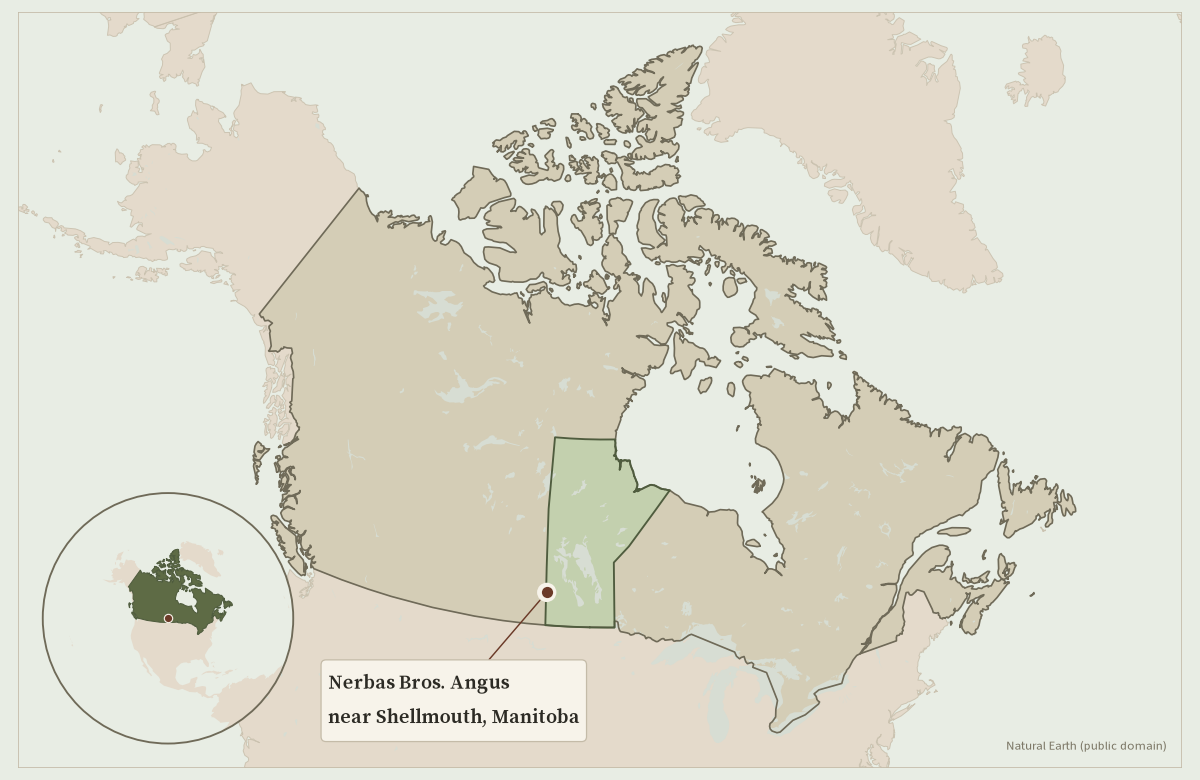
In the Assiniboine Valley of western Manitoba, near the small community of Shellmouth, the land runs along a river that can flood the flats and then rise into lighter, sandier ground. That is where Arron and Shane Nerbas ranch with their parents, Gene and Cynthia, under the name Nerbas Bros. Angus. They keep a herd of black Angus on grass, raise calves from their own cows, and sell breeding bulls and heifers. Their cattle are the medium-sized, grass-efficient sort, bred to do well on pasture rather than on a heavy ration of grain.
I came to them for a plain idea: move the cattle, and leave the grass a long time to rest.
The family and the land
The ranch name is older than the two brothers. Their father and uncle once farmed together, and that is where “Nerbas Bros” comes from. Gene still works alongside his sons, and Cynthia keeps the books. Arron and Shane, who both studied agriculture in Winnipeg, went away to other jobs and later came home. They are the third generation on the place. Their grandfather and father ran a mixed farm, with some grain, pigs, chickens and a dairy cow, before Gene turned it over to beef.
Even then they kept costs low. The cows calved out on the pasture in spring, and the herd wintered outdoors rather than in a yard. The family has tried to add land that lies next to what they already have, so the cattle can walk to the next pasture instead of being hauled, and so a calving group can stay together through the summer. What changed was how carefully they treated the grass.
Why they changed
After the BSE (mad cow) crisis, Arron has said, every beef farm in the district was asking where to go next. “There simply wasn’t enough profit. We were working way too much for little return.” In 2005 he and Shane took a holistic management course with Don and Bev Campbell of Meadow Lake, Saskatchewan. Their parents took the same course the following year. They were not looking for an environmental project. They wanted the business to pay, and they wanted a life with more in it than work.
The course did not make them throw out everything they already did. It did make them take the grass’s rest and recovery seriously. “Utilizing a grazing plan was very important to us, to make the land healthier long term.”
What they do now
Through the growing season the cattle are bunched together and moved on, often after a few days and sometimes every day. Only a small share of the land is grazed at any one time. The rest is left alone for weeks, or a whole season, so the plants can recover. Arron calls this adaptive grazing, guided by the grass rather than by the calendar. “We’re just using the two main things that are free — sunlight and rain — and we’re maximizing those,” he told Farm Credit Canada. They change the pattern from year to year, and use movable fencing so the same tracks and watering spots are not worn down again and again.
They have fenced off the stream banks so the cattle do not trample them. The pastures are long-lived grasses and legumes. “We just try and use grazing as much as possible to take the mechanical component out of it,” Arron told the Beef Cattle Research Council. They have not ploughed up and re-sown a pasture for many years, and hope they never have to. When cattle graze plants that have gone to seed, the seed is trodden back into the soil. Over time they have seen more legumes, better soil and more grass.
Winter on the Assiniboine is long. The family meets it by bale grazing, which they also call pod grazing. They set bales of hay out on poorer pieces of ground and move the herd from one group of bales to the next. “Bale grazing for us has been a huge benefit for the land,” Shane told Hay & Forage Grower. The hay the cattle leave, and their dung, feeds the soil where it is most needed. It also means less work, and a better life for the families and the animals. The aim is for each cow to graze most of her own feed through the year, with fewer months on hay. Moving onto fresh ground, even in winter, keeps the herd healthier too, because they leave their dung behind instead of standing in a yard.
They are not certified organic, but they use no artificial fertiliser or pesticides on the grassland. The cattle and the grass keep the place going.
Their grazing land now grows more than twice the grass it once did. With land as dear as it is, Arron told Canadian Cattlemen, that was like getting land for nothing: more grass, without having to buy another farm. There are more birds and other wildlife now, and the land is healthier above ground and below it, he told Farm Credit Canada. “We didn’t do it for the environmental component,” he said, “but the environmental component is equally as important and has been the big winner in our system.” In 2017 the family received the Manitoba Beef Producers’ Environmental Stewardship Award.
A Manitoba winter is longer and harder than anything a British field usually faces, and the bale-grazing habit is made for that cold. The simpler part of the work still travels well: move the animals before the grass is worn out, and then leave it alone long enough to grow back thick.
Frequently asked questions
Where is the ranch?
It is in the Assiniboine Valley of western Manitoba, near Shellmouth and not far from the larger town of Russell.
Who runs Nerbas Bros. Angus?
It is a three-family operation: Gene and Cynthia Nerbas, and their sons Arron and Shane with their families.
Do they sell beef as well as breeding cattle?
Yes. The heart of the business is raising calves from their own herd, and they also sell bulls and breeding heifers. They run a small business selling beef direct to customers in the nearby town.
Sources
- Nerbas Bros. Angus, “About Us”
- Matt McIntosh, “Case study: How one farm used rotational grazing to address a business challenge,” Farm Credit Canada
- Heather Smith Thomas, “Nerbas Bros Angus zeroes in on smaller-framed, grass-efficient cattle,” Canadian Cattlemen, 5 February 2019
- Alexis Stockford, “Nerbas Bros. Angus recognized for environmental efforts,” Manitoba Co-operator, 16 May 2017
- Jesse Bussard, “Bale grazing gets them through winter,” Hay & Forage Grower, 21 February 2019
- Beef Cattle Research Council, “Hooves not Harrows,” 11 June 2020
- Manitoba Grass-Fed Beef, Nerbas Bros. Angus profile