
Richard Perkins and Ridgedale: A Small Farm, Great Food, and a Living
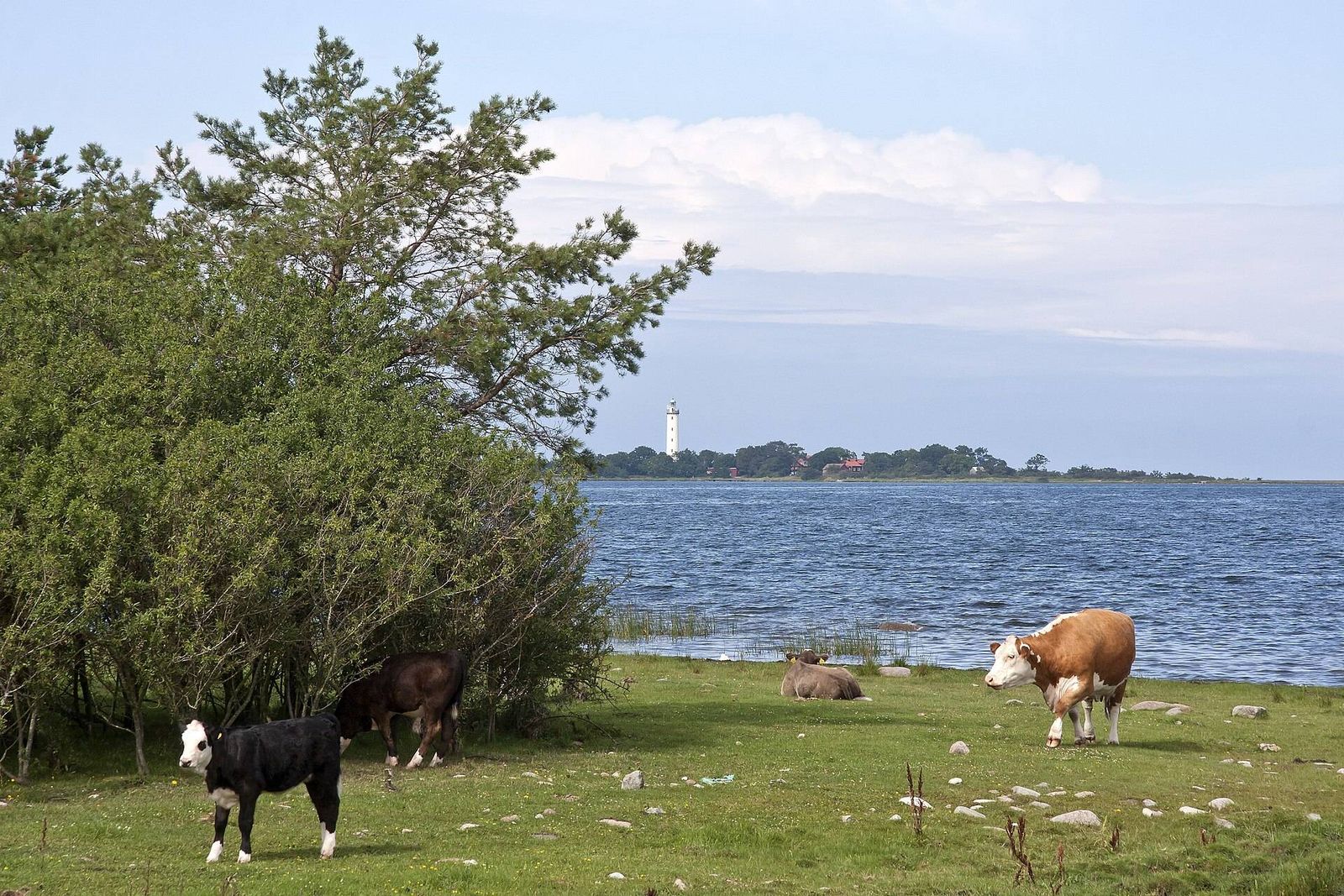
If you care about good food and living countryside, you will meet Richard Perkins and Ridgedale sooner or later. I think you should.
He did not inherit land, and he was not born into a farming family. He still went and built a small farm in rural Sweden that restores soil, feeds people well and pays its way, with grazing animals at the centre of it. For me he is a hero of the small farm.
A countryside boy who wanted a farm
He has said he was barely 15 when he knew he wanted to farm. He grew up in the countryside and loved being outdoors: watching lambs in the fields, catching fish and cooking them on a fire, breathing in the smell of the forest floor.
He wanted his own children to have that kind of life one day. The trouble was that his parents were not farmers, he had no land coming to him, and he did not yet know how to farm.
So he started with training. He holds a UK HND in Organic Crop Production and a Diploma in Applied Permaculture Design. His farm biography says that after agricultural college in 1999 he still had more questions than answers, so he went looking for people doing things differently.
In Australia he found permaculture, a way of designing farms around natural patterns. He liked its ethics but wanted clearer reasons and better proof. Later he learned Keyline Design, a way of planning land around how water moves across it. Then he found the work of Allan Savory. Perkins has said that Savory’s Holistic Management, especially the way it helps you decide what really matters, changed his whole approach to life as well as his farming.
I love that he kept learning until the ideas could work on a real farm.
Finding a home in Sweden
After years of teaching and design work around the world, he bought a small farm in Värmland, in rural Sweden. In a case study first published in December 2013 he was already writing about it: a little over ten hectares, far to the north, with a short growing season.
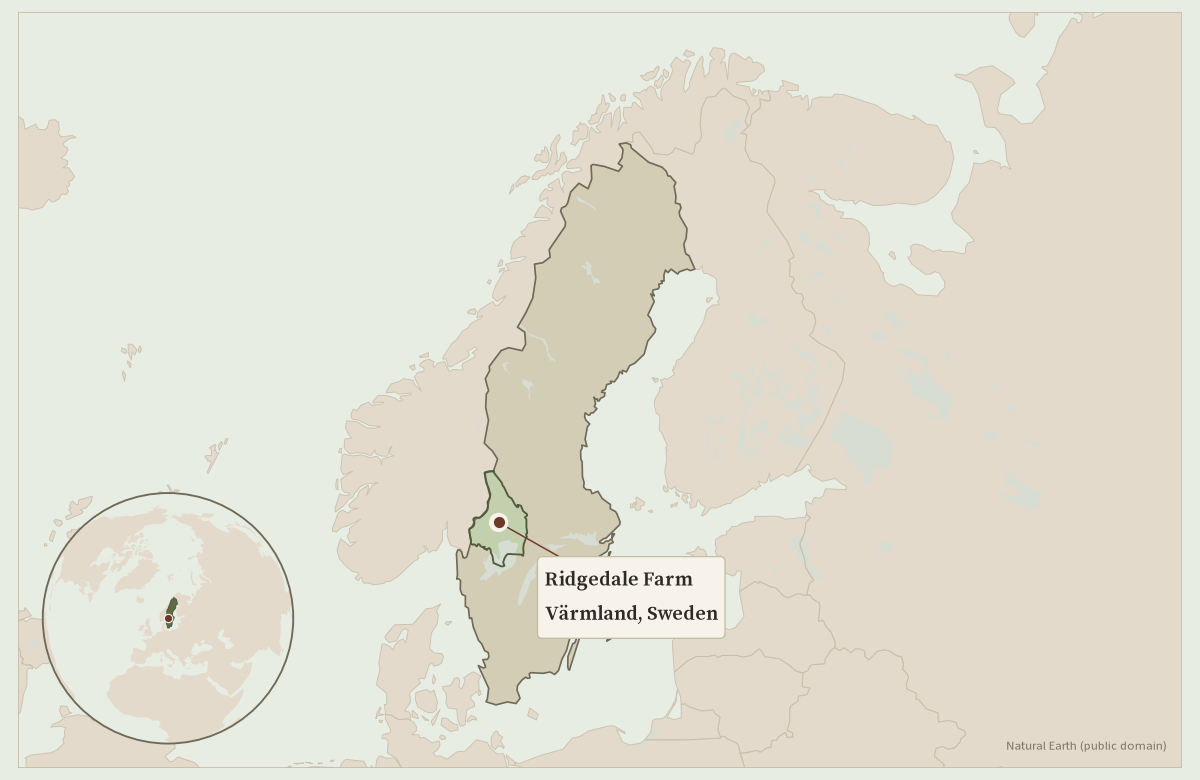
It was not an easy place to start. He has described making a living “in the middle of nowhere,” in a tightly regulated country, with a very short season and a tight budget. That is part of why his story matters. If a small regenerative farm can work there, it gives a lot of other people hope.
What he built at Ridgedale
On a modest patch of pasture, trees and sloping ground, Perkins fitted several small businesses together so the land could work hard without being worn out. Grazing animals sit at the heart of it, and I see them as the driving force behind the farm’s soil and habitat repair.
The farm raises 100% grass-fed beef and mutton, pastured chickens for meat, pastured eggs and forest-raised pork. There is also a no-dig market garden, where vegetables are grown without turning the soil. The food is sold in Stockholm and at Sillegården, a historic farm and restaurant he later bought to bring people and food back together in the landscape.
The farm is a classroom too. People come for workshops, trainings and internships, learning whole-farm design, planned grazing, market gardening and more. Because only so many can visit, he also built an online course, the Regenerative Agriculture Masterclass, and wrote a big, practical book.
The money side is cheering. His official biography says Ridgedale took in more than €250,000 in a six-month season, from less than three hectares of production. The book site adds that the farm was profitable from its first year. Money is not the only point, but a farm that does not pay cannot last. He has said they have been “making city wages” while restoring soils and habitats and producing the best food they can for their local community.
A book and a wide reach
The book is Regenerative Agriculture: A Practical Whole Systems Guide to Making Small Farms Work. It was offered for preorder in 2019, with an official publication date of 1 January 2020. It is a hands-on guide to designing a small farm so that the land, the food and the accounts all work together. His biography records that Joel Salatin called it “a must on every aspiring farmer’s bookshelf.”
His teaching travels well beyond one Swedish valley. His farm page says his approach to no-dig gardening and pastured poultry has been copied by thousands of people around the world. His biography says his YouTube channel has over 180,000 subscribers, and that he has taught thousands more through live trainings and online courses.
This is one of the loveliest parts of the story. He built a farm, and then showed other people they might build one too.
Why his story matters
For me, Ridgedale is about living soil, because grazing animals are moved with care. It makes room for wildlife alongside the chickens, cattle, sheep and pigs, and grows good meat, eggs and vegetables in the same ground with less need for fertiliser and spray. Above all, it is a working farm in a short northern season that feeds people and pays its way.
You do not need to become a farmer to take heart from that. When you buy grass-fed beef, pastured chicken and eggs from farms like this, you are part of the same hopeful story.
Every place is different, and no farm needs to copy Ridgedale move for move. He asked the right question, then did the patient work of answering it on the ground.
Frequently asked questions
Who is Richard Perkins?
A farmer, teacher and writer, best known for Ridgedale Farm in Värmland, Sweden. He trained in the UK, built a small regenerative farm, and has taught thousands of people how a small farm can work.
What is special about Ridgedale?
It is a small farm, a little over ten hectares, that combines pastured poultry, grazing animals, a no-dig market garden and teaching on the same land, while restoring soil and habitat and making a living.
What food comes from the farm?
The farm site lists 100% grass-fed beef and mutton, pastured meat chickens, pastured eggs, forest-raised pork and no-dig market garden crops.
Why do I call him a hero?
Because he started without a family farm, built one that works, and then spent years helping other people do the same.
Sources
- Richard Perkins, official about page
- Richard Perkins, official press biography
- Ridgedale Farm, homepage
- Ridgedale Farm, About Us
- Official site for Regenerative Agriculture
- Order page for Regenerative Agriculture, including publication date
- Richard Perkins, “Regenerative Agriculture available to preorder,” September 2019
- Richard Perkins, “Case Study: Establishing a Cold Climate Permaculture Site in Sweden using Keyline Design, Part 1,” Walden Labs, first published December 2013